

People are the source of value at Huawei. Their health, safety, and well-being are of the utmost importance to us – not just the people who work at Huawei, but who work with us across the entire supply chain. We abide by a strict set of standards for suppliers, with indicators for labor, health, safety, working environment, and business ethics, to actively appraise their compliance and manage our relationship accordingly.


Comprehensive onsite assessment
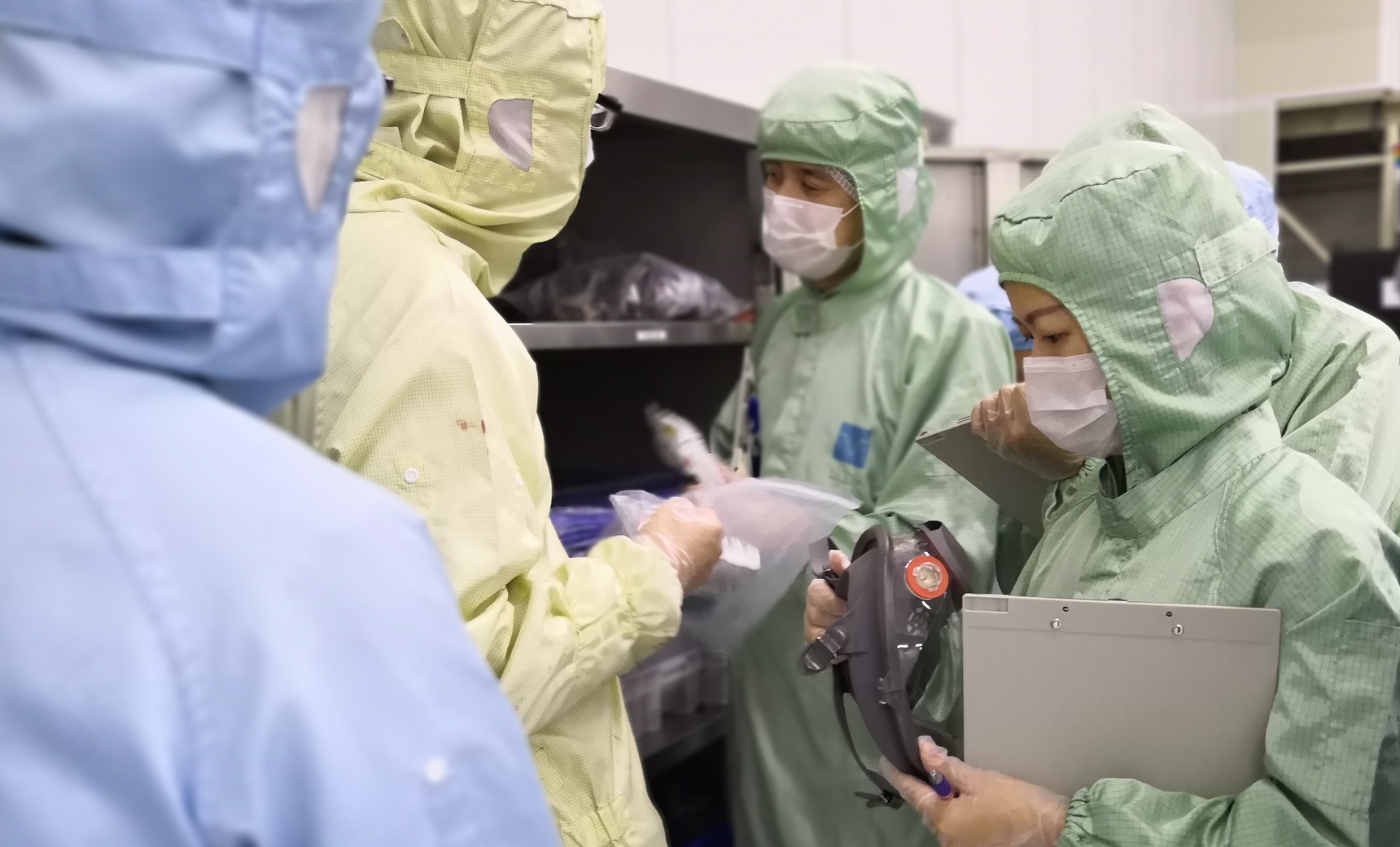
Huawei Consumer Business Group invites independent audit firms to conduct CSR assessment for suppliers. The assessment is based on the Huawei Supplier Social Responsibility Code of Conduct, covering labor, health and safety, environment, business ethics, management systems and other aspects.
Comprehensive onsite assessment
Huawei Consumer Business Group invites independent audit firms
to conduct CSR assessment for suppliers. The assessment is based
on the Huawei Supplier Social Responsibility Code of Conduct,
covering labor, health and safety, environment, business ethics,
management system and other aspects. We not only review tier-1
suppliers, but also review tier-2 suppliers that extend to
upstream.
For issues found during onsite audit, we guide
suppliers to identify the root causes and take corrective and
preventive measures.
More Safety,
more healthy,
more Green
In addition to the CSR audit, we invite professional organizations to conduct special assessment of suppliers' environmental protection, fire safety, and occupational health.
More
Safety,
more healthy,
more Green
In addition to the CSR audit, we invite professional
organizations to conduct special assessment on the environmental
protection, fire fighting, and occupational health of suppliers.
Senior experts in the industry are invited to take the lead in
identifying improvement opportunities, providing guidance to
suppliers on corrective and preventive measures.
Through
these special assessment projects, suppliers fully identify
potential risks, improve internal management mechanisms, develop
a professional management team, and greatly improve their
professional management capabilities in the fields of
environmental protection, fire safety, and occupational health.

Supplier self-assessment
Huawei encourages the self-management of all suppliers, we ask suppliers to conduct a self-assessment.

Supplier performance assessment
Huawei CBG conducts a comprehensive evaluation of the suppliers' CSR performance, on-site audit results, and improvement over the past year, and the evaluation results are included as part of the supplier's comprehensive performance evaluation results.
Supplier performance assessment
Huawei CBG conducts annual supplier sustainability performance review, which is a comprehensive assessment of suppliers' CSR performance, on-site audit results, and improvement in the past year. The assessment results are part of the comprehensive supplier performance evaluation results, accounting for 10%-15%. Performance evaluation results directly affect the commercial cooperation between suppliers and Huawei, and are used in the supplier selection and category supplier portfolio management of new projects. Suppliers with good performance results have more opportunities for business cooperation. For suppliers with poor performance, it is required to make remediation within a specified period, reduce the procurement share or business cooperation opportunities, or even cancel the cooperation relationship.


Develop supplier CSR leadership
Huawei CBG invites senior executives of suppliers to participate in
Huawei Consumer BG Supplier Quality Conference periodically to improve the CSR awareness
of suppliers and promote the CSR leadership of suppliers' executives.
For high-risk suppliers, Huawei requires the top management to pay close attention and
make a specific work report on CSR improvement.

Development together
Huawei CBG routinely conducts supplier CSR training and coaching to improve existing supplier CSR capabilities; for potential new suppliers, our CSR professionals will evaluate and coach suppliers to help them understand and meet Huawei CSR requirements.
Development together
For potential suppliers and newly introduced suppliers, Huawei
CBG organizes CSR professionals to evaluate and coach suppliers
to help them quickly understand and meet Huawei CSR
requirements.
Huawei CBG routinely conducts supplier CSR
training and coaching to guide suppliers to adopt industry best
practices and incorporate sustainable development into business
strategies, reduce business risks, and improve operational
efficiency. Huawei CBG has also cooperated with professional
organizations in implementing the supplier labor rights,
environmental protection, fire safety, and occupational health
improvement projects. Through these projects, suppliers fully
identify potential risks, improve internal management
mechanisms, develop a professional management team, and greatly
improve their professional management capabilities in HR,
environmental protection, fire safety, and occupational health.

Win-win
To help suppliers identify opportunities in strategic, commercial, technical, quality, project management, and CSR fields, thereby improving the overall performance and competitiveness of suppliers.
Win-win
To help Huawei CBG strategic suppliers achieve sustainable development, we launched a strategic supplier development project to help suppliers identify opportunities in strategic, commercial, technical, quality, project management, and CSR fields, thereby improving the overall performance and competitiveness of suppliers. In the CSR field, we identified many development opportunities, such as employee well-being, GHG, waste reduction, supplier management, and health and safety.

More sense of belonging, more harmonious
We are concerned about whether suppliers' employees, especially front-line workers are working and living in a healthy, safe, and dignified environment.
More sense of belonging, More harmonious
We are concerned about whether suppliers' employees, especially front-line workers are working and living in a healthy, safe, and dignified environment. Is there a good career path?
Feedback from suppliers: Thanks to the improvement in the past year, the turnover rate of suppliers decreased from 9.0% to 2.3%. The decrease in the turnover rate of the factory reduced the cost of recruitment and personnel training, the sense of belonging of the workers was stronger, and the overall operation efficiency of the factory was significantly improved, factories are therefore better able to develop sustainably.


Responsible material
sourcing
In 2011, we launched an investigation of the sources of tungsten, tin, tantalum, and gold (3TG); By 2013, we have traced 3TG to the smelter or refinery. The list of smelters or refineries is routinely investigated and updated every year.
Responsible material sourcing
In 2011, we started to investigate the sources of tungsten, tin,
tantalum, and gold (3TG)in our products.
In 2013, we traced
3TG to the smelter or refinery. The list of smelters or
refineries was routinely investigated. For unqualified smelters
or refineries, which is not in the list released and updated by
RMI,we asked the supplier to replace them until they are
qualified.
In 2015, in order to further improve the
management of responsible materials sourcing, we invited
third-party professional institutions to review the responsible
mineral management process and update the conflict mineral
assessment and due diligence process based on the “OECD Due
Diligence Guidance for Responsible supply Chains of Minerals
from Conflict-Affected and High-Risk Areas".
In 2016,We
started the management of responsible cobalt.
From 2017, we implemented the cobalt due diligence management
based on the “Chinese Due Diligence Guidelines for Responsible
Mineral Supply Chains” released by CCCMC and “OECD Due Diligence
Guidance for Responsible supply Chains of Minerals from
Conflict-Affected and High-Risk Areas". Third-party audit
organizations were invited to perform due diligence management
and review on cobalt supply chain factories, and we traced back
to the list of cobalt smelters, a few of them were traced back
to the upstream cobalt mines.
In 2019, we further improved
the responsible mineral management, focusing on not only
conflict and high-risk areas, but also human rights,
environment, health, and security risks of the entire supply
chain, which aligns with industry and multi-stakeholder
inniatives.
Policy and Statement
Learn more about Huawei supplier CSR management standards and requirements.

Supplier CSR Code of Conduct
Learn more
Preventing Modern Slavery
Learn more
Statement on Conflict Mineral
Learn more