

Executing with Confidence: How Smartwatch Precision Wins Marathons

Copy Link


Written By Yago Rojo
Executing with Confidence: How Smartwatch Precision Wins Marathons
Published on 25/03/2026 13:50
Copy Link
Written By Yago Rojo
Executing with Confidence: How Smartwatch Precision Wins Marathons


About the author:

01. Training Plans That Support the Endurance Athlete in Me
02. Tempo Run and Lactate Threshold: The True Limit of The Marathon Runner
03. Load Management and Preventing Overtraining
04. Running Power: More Stable Than Heart Rate
05. Race Scenario: Discipline Under Pressure
06. Conclusion: Technology at the Service of Judgement
Planes de entrenamiento que apoyan al atleta de resistencia que hay en mí
Hardware alone is not enough. What really sets the HUAWEI
WATCH GT Runner 2 apart from other
smartwatches is how it integrates into my weekly routine. In a week during the specific marathon
period, I do the following workouts guided by HUAWEI’s Personalized Smart Training Plans:
● 3 quality sessions (long runs, intervals or tempo runs),
● 1 progressive long run,
● Aerobic recovery runs,
● Strength training,
● Daily mobility, and
● Occasional cycling for active recovery.
To put the watch to the test, I followed a structured plan guided by HUAWEI’s Personalized Smart
Training Plan feature, which lays out each workout with clear goals, pacing targets, and effort
zones. Every session has a purpose, and the aforementioned workouts are the ones I rely on to
bring me a step closer to my next race goal.
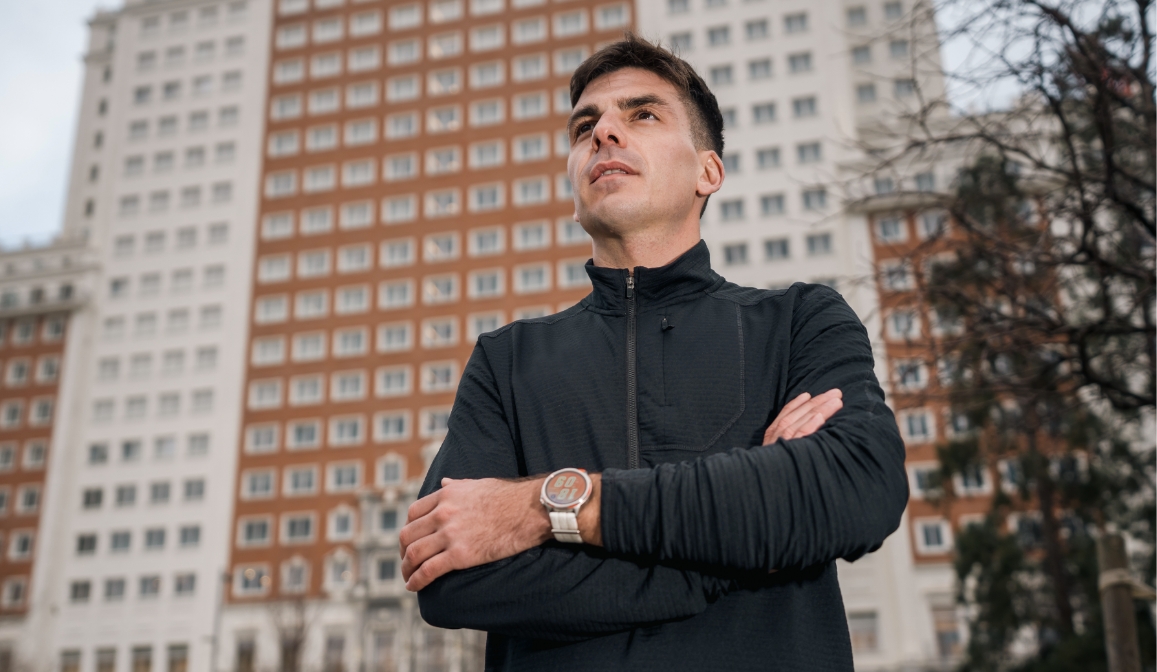
To put the watch to the test, I followed a structured plan guided by HUAWEI’s Personalized Smart
Training Plan feature, which lays out each workout with clear goals, pacing targets, and effort zones.
Every session has a purpose, and the aforementioned workouts are the ones I rely on to bring me a step
closer to my next race goal.
In high performance, overtraining does not happen suddenly. It is progressive, silent. Small, misguided
decisions over consecutive days can lead to fatigue that takes weeks to reverse. This is where load
management becomes a tool for longevity. The watch even dynamically tracks my recovery and ensure that I
am 100% recovered for my next training sessions, accounting for sleep, stress, and accumulated load.

In high performance, overtraining does not happen suddenly. It is progressive, silent. Small, misguided decisions over consecutive days can lead to fatigue that takes weeks to reverse. This is where load management becomes a tool for longevity. The watch even dynamically tracks my recovery and ensure that I am 100% recovered for my next training sessions, accounting for sleep, stress, and accumulated load.
Tempo Run and Lactate Threshold: The True Limit of The Marathon Runner
If I had to point out the physiological factor that has most influenced my development as a
marathon runner in recent years, I would undoubtedly say lactate control. Pure speed is
important, as is aerobic endurance, but the real balancing point, the one that determines
whether you can sustain a pace for more than two hours without collapsing, is the lactate
threshold.
I love talking about this topic because I am truly passionate about lactate monitoring in key
training sessions. In fact, in many of the videos I post
on my YouTube channel, you can see how
I try to teach this useful tool for long-distance runners. The lactate threshold determines the
intensity that can be sustained over a long period of time. In my case, the data from my watch
during tempo sessions allows me to estimate this critical point, which, if exceeded, can be very
detrimental when it comes to maintaining a steady pace over many kilometres.

What exactly is lactate?
When we run, our body produces energy mainly through aerobic means. But as the intensity
increases, the energy demand grows and anaerobic metabolism comes into play more prominently. As
a result, lactate production increases. The problem is not lactate itself, but its accumulation.
When you run a marathon, crossing that threshold for too long means jeopardising the end of the
race.
That's why, for me, the threshold isn't just another number: it's the physiological limit that
defines how far I can push myself without paying an irreversible price at kilometre 35.
When you cross the lactate threshold:
• Muscle acidity increases, disrupting the chemical environment needed for efficient energy
production
• Muscle contraction is altered, meaning your muscles can no longer fire as effectively
• Fatigue accelerates, forcing you to slow down or stop sooner than planned
• Running efficiency decreases, so every step costs more energy for less output
The role of tempo runs
The training most directly related to the threshold is the tempo run. It is the session that I
respect the most and the one that provides me with the most information. With theHUAWEI
WATCH GT Runner 2, I can now easily create an individual tempo run via Workout > Outdoor
Run > Courses >
Tempo Run

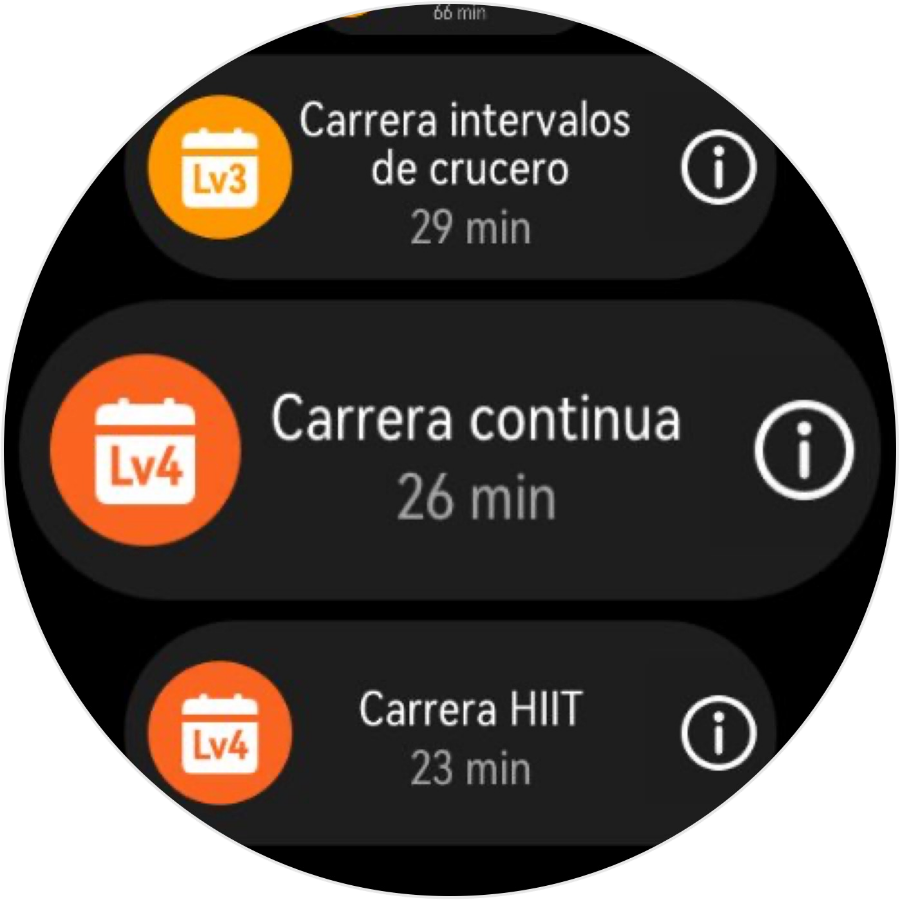


Those courses are designed to run right at the point where lactate begins to accumulate, but without exceeding it excessively. It is the training that teaches the body to tolerate higher concentrations without losing efficiency. The key is precision. If the pace is too high, the training becomes an anaerobic session that generates unnecessary fatigue. If it is too
“Knowing my lactate threshold with the HUAWEI WATCH GT Runner 2 allows me to train right at the limit that improves my performance without compromising recovery.”
How we work with lactate tests in my preparation
We usually perform the tests on a treadmill or track, with progressive increases in speed.
Traditionally, a small blood sample is taken after each block — usually from the finger — to measure the
lactate concentration in mmol/L. However, with the HUAWEI
WATCH GT Runner 2, I can now monitor this data
continuously and without the need for invasive procedures.
As the pace increases, the lactate curve rises progressively until a clear inflection point appears:
that is my threshold. The watch provides me with real-time data on how my body is managing lactate
production and the intensity of the effort. The important thing is to observe how it evolves throughout
the training cycle.
For example, if at the start of the block my threshold is 3:06/km and six weeks later it moves to
3:02/km, it means that I can now sustain a faster pace with the same metabolic cost. That improvement is
pure gold in a marathon.
How can the watch estimate the threshold without a blood sample?
It's a logical question. I've been doing lactate tests with capillary blood sampling in the laboratory
for years. There, we directly measure the lactate concentration in mmol/L after each speed step. It's a
real biochemical measurement. So how can a watch estimate something like that without pricking your
finger?
The key is that the watch does not measure lactate directly. What it does is estimate the lactate
threshold using advanced physiological models, combining multiple variables that it can accurately
record:
● Heart rate and its behaviour at different intensities
● Sustained pace during progressive efforts
● Running power
● Heart rate variability
● Relationship between external load (pace/power) and internal load (heart rate)
● Training history and cumulative adaptation

The physiological principle behind the estimate
When a runner approaches their lactate threshold, something very characteristic occurs: the heart
rate stops increasing linearly and begins to show a more pronounced response to small increases in
pace. In addition, the relationship between power and heart rate begins to lose efficiency. These
inflection points are measurable with advanced optical sensors and algorithms that analyse large
volumes of data.
In other words, the watch detects the moment when your body stops behaving as if it were in a stable
aerobic zone and begins to enter a more metabolically demanding phase. It does not measure lactate.
It detects the physiological behaviour associated with its accumulation.

Load Management and Preventing Overtraining
There are days when your body wants more. You feel competitive, eager to push yourself,
confident. But the data doesn't always support that feeling. And in my experience, ignoring
objective signals often comes at a cost.
I remember a particularly demanding week, when I increased the volume and specific sessions at
marathon pace. After two nights with low rest scores (< 80) and heart rate variability below my
usual average, the watch flagged my recovery as insufficient and adjusted accordingly. The
initial call for a key long interval session was replaced with a gentle run accompanied by
mobility and technique work. It was a strategic decision, not an emotional one. Two days
later, my watch logged 8 hours and 26 minutes of sleep, with 2 hours and 48 minutes of deep
sleep and 2 hours and 30 minutes of REM, scoring 91 out of 100, better than 99% of users.
Sleep quality, heart rate variability, and how you feel in the morning, it all adds up. I
was able to do the run on that day.
Without that objective information, I probably would have forced myself to complete that
intense session. And pushing myself at that point could have affected the whole week, or
even increased the risk of injury. When you train at the highest level, the margin is
minimal.
You don't just train for a marathon by running. You also train by sleeping. Sleep quality,
resting heart rate, heart rate variability and subjective feeling all form a whole. It is
essential to listen to your body. Measuring it brings clarity.

Running Power: More Stable Than Heart Rate
For many years, my main references were pace and heart rate. Like any runner, I learned to
interpret the clock by looking at minutes per kilometre and beats per minute. But as I competed
at a higher level, I realised that both metrics, while essential, have clear limitations.
Pace is conditioned by external factors: slope, wind, and surface type. You can be exerting the
same physiological effort and see your pace slow simply because you are running on a slight
incline or facing a headwind. Heart rate, on the other hand, has a natural physiological delay.
When you change intensity, it takes time for your heart rate to stabilise. In high-precision
efforts, such as those required to run a marathon under 2:08, that small delay can make all the
difference.
That's why running power has become a key element in my training with the HUAWEI
WATCH GT Runner 2. Power responds immediately to actual mechanical effort. It doesn't
depend so much on visible
speed, but on the work your body is doing at that moment.
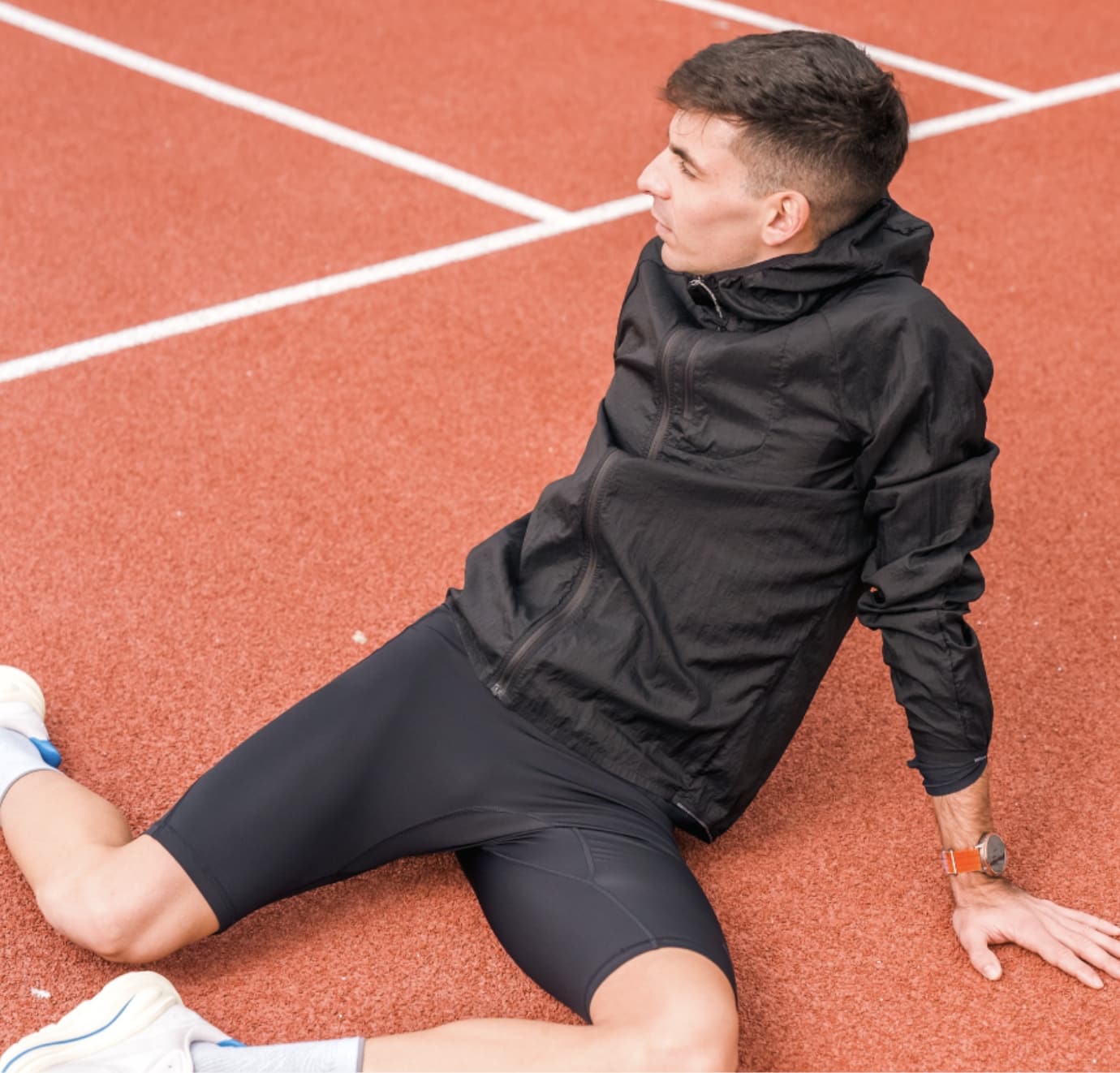
I use it especially in situations where pace is no longer a reliable reference:
In marathons, where conditions can vary throughout the course, such as in open areas, sharp
turns, or changes in slope, having a metric that reflects actual effort and not just apparent
speed is a competitive advantage. It allows me to save energy when the environment is
challenging and push myself to the limit when conditions allow.
In training, I use the watch to explore limits, experiment and validate trends. I analyse how my
body responds to certain power levels, how fatigue evolves and how power relates to my target
marathon pace. It's a controlled environment where I can adjust, fail and try again.
Situations I rely on Running Power
● Long climbs where maintaining the same pace would be physiologically ineffective,
● Days with headwinds that distort speed,
● Changes in surface between asphalt and dirt, and,
● Training on circuits with accumulated elevation gain.

Race Scenario: Discipline Under Pressure
During a competition, the function of the smartwatch changes. I no longer scan, I just confirm
and execute. Personally, I mentally divide the marathon into three very clear blocks:
● Control (0-15 km)
● Stability (15-30 km)
● Mental endurance (30-42 km)
In the control phase, my priority is to hold back. Even if I feel great or the group
speeds up
slightly, the goal is to conserve energy. My watch reminds me if I am on track with my goal of
3:02 min/km for the marathon. My power and pace must be in line with what I have worked on in
previous weeks.
In the stability phase, from kilometre 15 to 30, the race becomes more honest. Here,
maintaining
pace is more important than accelerating. If at kilometre 25 I am 10 seconds ahead of plan, I do
not celebrate. I adjust. That discipline prevents you from falling behind in the final stretch.
For example, on the day I achieved my personal best of 2:07:47 in the 2023 Valencia Marathon,
there was a 5-kilometre stretch, from kilometre 20 to 25, where the pace dropped to 3:05 min/km,
when my goal was 3:02 min/km. At that moment, staying calm, knowing what the plan was and
analysing the race situation to make sure I was saving my strength at the right time helped me
to have enough energy for the final 12 kilometres of that race.

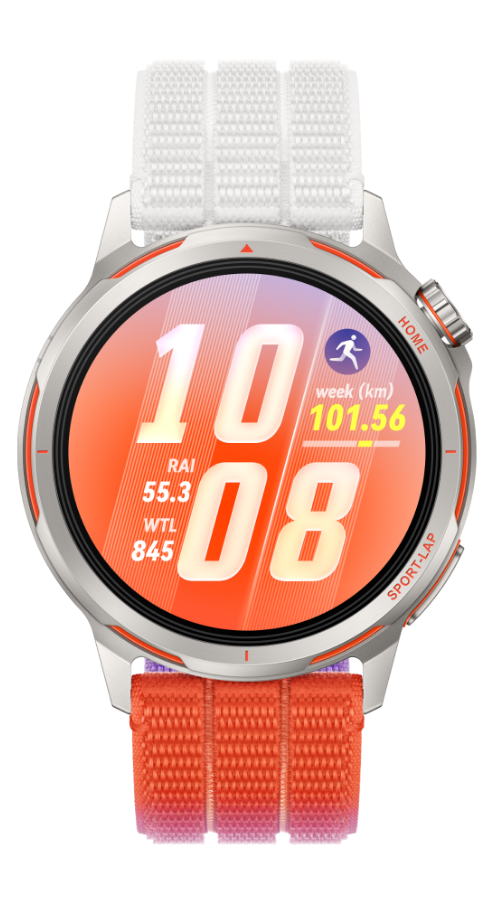
Master real-time pace with ultra-precision GPS
Intelligent Marathon Mode
Slim Design with Titanium
Accurate heart rate, HRV and ECG
The last part, mental endurance, is where the body begins to negotiate. Here, technology reduces
uncertainty. Knowing that the average pace and accumulated effort are within the expected range allows
me to focus on executing without hesitation. That day in Valencia, when I had already passed kilometre
35, I ran my fastest splits, running at a pace of 2:57 min/km from kilometre 35 to 40. And that was
partly thanks to controlling my pace in the previous kilometres and my mental endurance, which I had
worked on during all the months of training.
The difference between training and competition is external pressure: rivals, the crowd, expectations.
The watch does not eliminate that pressure, but it provides internal stability. This reduces the margin
for error. After so many years of competing, I have learned that no tool can replace experience. But a
well-used tool enhances that experience.
In the marathon, success does not only depend on how much you train. It depends on how you manage every
invisible detail: rest, accumulated load, discipline in pace and consistency in metrics. Thanks to
technologies such as the HUAWEI
WATCH GT Runner 2, we can have all our metrics in a single device, ready
to measure results and workouts.

Conclusion: Technology at the Service of Judgement
After more than half my life chasing seconds, I have understood something fundamental: marathons
are not won by those who suffer the most, but by those who make the best decisions. And making
good decisions when you are at your limit requires clarity.
The HUAWEI
WATCH GT Runner 2 does not make decisions or run for me. Nor does it replace the
intuition I have developed over the years or the experience I have accumulated in international
championships. But it gives me something that is gold in high performance: accurate information
at the right time. And that information allows me to make decisions with less margin for error.
The marathon guide and race pace guide help me turn an ambitious goal into a controlled
kilometre-by-kilometre execution that I hope will translate into a new personal best in the
future. The ultra-precise GPS supports all strategic analyses. It allows me to review routes,
understand micro-variations in pace and optimise every strategic detail. The lactate threshold
measured accurately by the watch guides my intensity in key training sessions. Knowing exactly
how far I can go without jeopardising the end of the race gives me confidence.
Integrated planning, along with sleep and recovery management, protects something even more
important than my personal best: my athletic longevity. I don't want to run fast just this year.
I want to do it for many more years, with consistency, balance and health. High performance
isn't just about running faster. I trust my experience. I trust my discipline. And now I also
trust the data that supports every decision I make on the path to my next personal best.
The information is to be used as general information only, and is not to be taken as advice with respect to any individual situation and cannot be relied upon as such. A healthcare provider should be consulted when attempting to diagnose a condition or when determining the best course of action for any health-related concern.
Users should exercise in a safe and suitable manner which is commensurate to their own exercise capabilities and limits.
The heart rate, HRV and sleep tracking features are not a medical device, and therefore its monitoring data and results are for reference only and should not be used as a basis for medical diagnosis or treatment.
Yago Rojo
Report
Read More
Explore


Copied