

Guided by GPS: How HUAWEI WATCH GT 6 Pro Supports Trail Runners

Copy Link


Written by Aurelien Dunand-Pallaz
Guided by GPS:
How HUAWEI WATCH GT 6 Pro Supports Trail Runners
9 min readPublished on 10/10/2025 · 07:15
Published on 10/10/2025 · 07:15
Copy Link

About the Author

01. Navigation and Safety in the Outdoors
02. Monitoring Effort – Precision in the Mountains
03. Post-Run Analysis – Recovery Matters
04. A Reliable Partner for Every Trail
Navigation and Safety in the Outdoors
Trail running means venturing into nature – safety is always my priority. To ensure that, I need to know my routes, or prepare them in advance. Orientation is crucial. In my early days, I relied on paper maps. Later, I used mobile apps utilizing GPS, but pulling out a phone mid-run can be inconvenient and even unsafe.
In unknown trail running environments, I need a reliable tool with very accurate GPS to maintain a peace of mind and focus on performance. The ability to place markers along the route can be very useful during a competition. It allows us to identify aid stations on the map or highlight important points such as the start of a major climb, for example
On the HUAWEI WATCH GT 6 Pro
, I simply import my GPX (GPS exchange format) track onto the HUAWEI Health app and sync it to the watch. The quality of the base map is very precise, and it is easy to zoom in or out with the watch’s scroll wheel. In addition, the base map gives me a view of place names, as shown in the screenshot (“La Côte”).
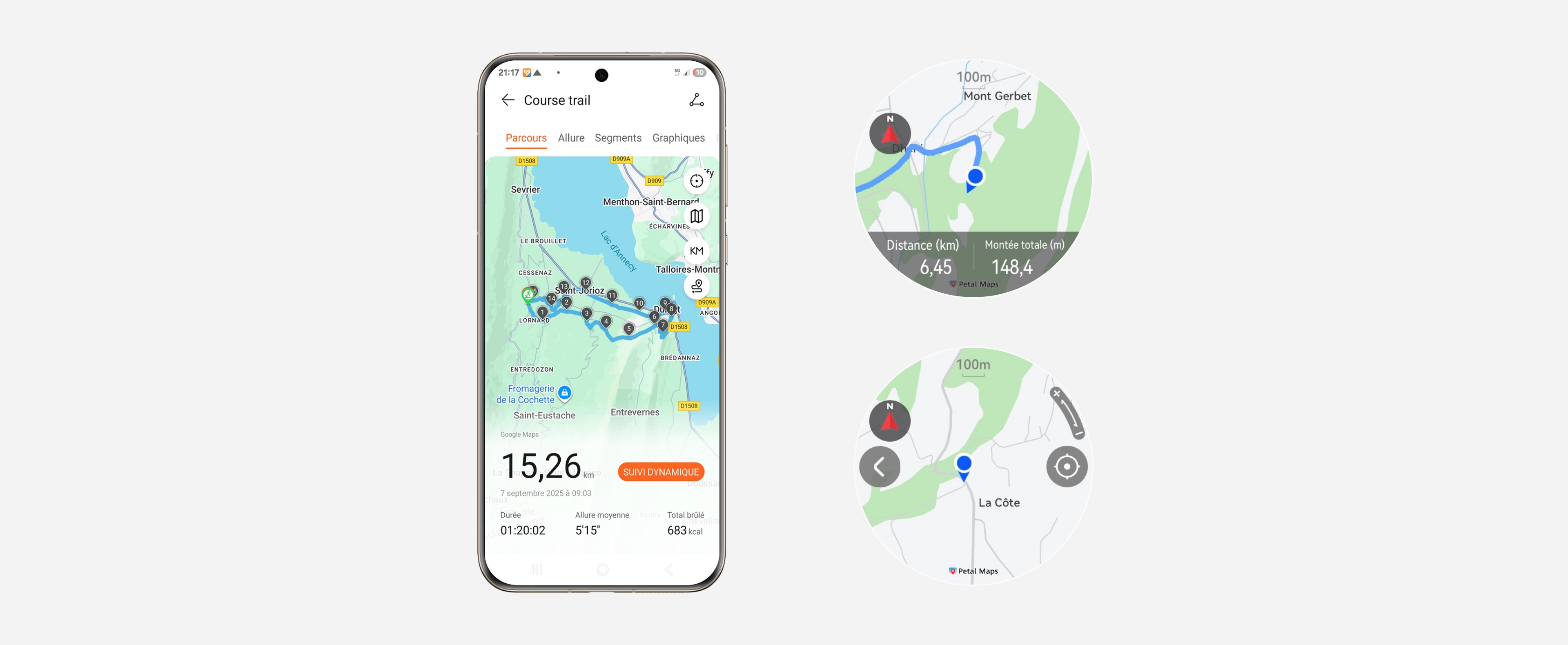
I often plan my routes on Strava, then transfer the GPX file. It’s also possible to automatically sync imported routes from external sources to the smartwatch, and I can store up to 50 on the app. I feel that the real-time navigation on the watch has been upgraded indispensable, and more accurate than watches I have previously used, especially when training in new areas where I don’t know every trail.
Monitoring Effort – Precision in the Mountains
Trail running takes me through an incredible variety of terrain: volcanic slopes on Réunion Island, steep alpine climbs at the Hardrock, and sand dunes in Morocco. Wherever I train or race, efficiency in preparation is key. That means quantifying my intensity, so I don’t start out too fast or train in the wrong zone. It is very important to stay in the green or yellow zones (fat-burning or aerobic) during long endurance sessions in order to maintain a moderate intensity and avoid tiring too quickly. The orange and red zones (anaerobic and extreme) should only be reached in specific sessions, such as interval training, but should be avoided during long workouts or long-distance competitions.

The HUAWEI WATCH GT 6 Pro
makes this simple. Beyond flat pace, it provides a grade- adjusted pace – a crucial metric. It lets me compare my effort on a 16% climb to what it would be on flat terrain. This helps me keep my intensity in check, especially at the start of a race when it’s easy to go out too hard. Of course, grade-adjusted pace is still an indirect indicator. That’s why I also rely on heart rate monitoring, clearly displayed across different screens in Trail Running mode, where you can also turn on the option for your heart rate to be broadcasted, eliminating the need to look at the watch for this purpose.
To prepare specifically for hot conditions, I carried out an indoor home-trainer session. Over the course of one hour, I wore a heavy jacket to intensify the heat effect and simulate racing in higher temperatures. In such training, monitoring heart rate is crucial, as it rises significantly faster when body temperature increases. This method provides an effective way to adapt the body to challenging race conditions

Accurate GPS and Heart Rate for Advanced Sports
Up to 21-Day Battery Life no more battery anxiety for outdoor sports
Pro-level Cycling Tracking with Virtual Cycling Power
Sapphire Glass Titanium Alloy
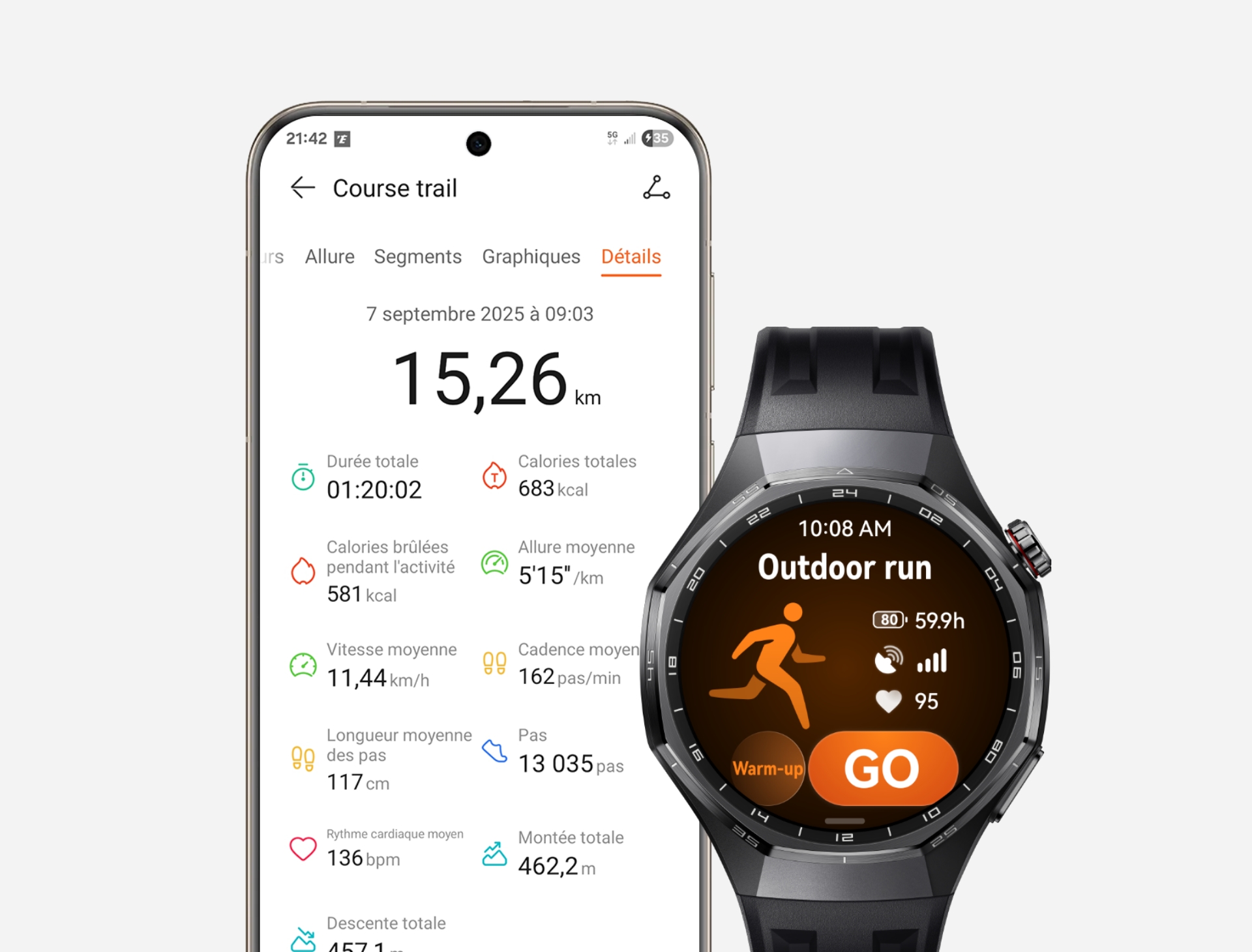
For example, in my first recovery run after the UTMB (175 km), I had to keep my heart rate below 140 bpm. Thanks to the watch, I managed an average of 136 bpm, with just a few spikes – exactly what I needed to recover safely. My session lasted 1 hour and 20 minutes, covering 15.26 km with 460 meters of elevation gain. It was a relatively long run for a first outing after my 175 km race. Despite that, the pace was solid, averaging 5’15/km. What stood out most was that my average heart rate was slightly high at 136 bpm for a recovery run. This is often the case when resuming training, as the heart is well rested yet slightly less conditioned, which causes it to beat faster even with moderate effort.
But training is a never-ending cycle. In order to stay continuously fit and perform at a high level for a long and healthy career, I need to take the data from my sessions one step further and analyze what’s presented to me.

“The Trail Run mode and the grade-adjusted pace data allowed me to monitor and adjust my uphill effort in a completely new and innovative way.”
Good to know:
Running Pace Zones
- Extreme – short bursts at maximum effort, building speed and power.
- Anaerobic – very hard effort, improving maximum performance and VO₂ max.
- Aerobic – hard but sustainable effort, key for endurance races.
- Fat burning – steady, controlled pace for long-distance events.
- Warm Up – easy recovery pace, helps with active regeneration.
Post-Run Analysis – Recovery Matters
Once my session was over, I sat down to analyze my heart rate recovery. At the start of the test, my heart rate was 145 bpm, and by the end it had dropped to 76 bpm. This shows a strong ability of the heart to return close to its baseline value (my resting heart rate is 50 bpm). This quick and simple measurement after training provides valuable insight into cardiac fatigability.
After every run, I immediately check the watch’s data. First, my cadence: ideally around 170 steps per minute, which reduces injury risk. Next, I look at my average heart rate, which quantifies overall session intensity. The smartwatch also breaks down the time spent in each training zone – for ultra-endurance preparation, maximizing time in the aerobic and fat-burning zones is essential.
Therefore, I pay close attention to the calories burned. Refueling properly is just as important as training itself. Being a professional athlete means not only working hard, but also recovering smart – meals with the right amount of macronutrients are part of the job. I focus on tracking the grams of carbohydrates and proteins I eat each day according to my level of physical activity, while also keeping an eye on total calories to avoid an energy deficit. For example, if I eat 100 g of rice or pasta, I know that this corresponds to around 350 kcal and 30–35 g of carbohydrates. This type of tracking helps me better balance my nutrition with my training. For athletes who want even deeper insights, Huawei Health+ provides advanced nutrition analysis and personalized recommendations, making it easier to align diet with performance goals.
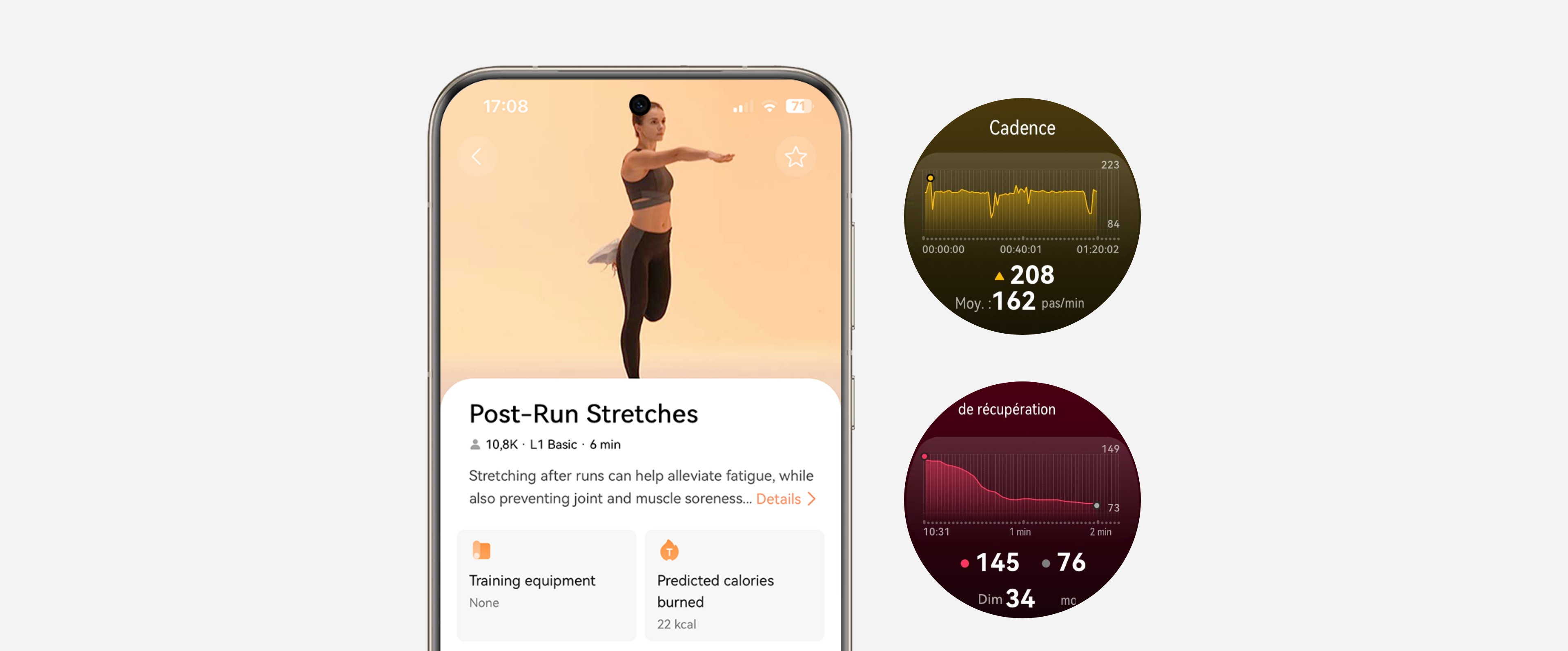
The watch even reminds you that stretching after a run is more than just a cool-down ritual. It helps muscles recover faster, reduces stiffness, and lowers the risk of injury. By relaxing the body after intense effort, stretching also improves flexibility and long-term performance.
For beginners especially, it can be difficult to know which stretches to do and how long to hold them. The app makes this simple: guided post-run routines ensure that even those just starting their training journey can recover effectively, build good habits, and stay motivated for the next session.

“Run fast, correct your path with your HUAWEI WATCH GT 6 Pro and accelerate further to reach the finish line!”
A Reliable Partner for Every Trail
For me, comfort and reliability are non-negotiable. The HUAWEI WATCH GT 6 Pro is far more than a gadget: it is a valuable tool that keeps me safe and helps optimize my training. Preparing GPX tracks in advance, knowing my heart rate zones, and relying on precise its GPS navigation ensures I stay on course and in control.
Upon thinking about my experience with the smartwatch, one moment stands out: While running near my in-laws’ home, I mistakenly took a left turn. The watch alerted me, and I quickly corrected course. Later, I learned the wrong trail led to cliffs – a dangerous path I was glad to avoid. If this had happened during a race, it would have cost me months of training and preparation. There is no definable number of health and sports statistics that are more helpful than this alone. If I were to somehow stray onto a dangerous path, I still have the fall detection and emergency function that allows me to call an emergency contact.
The HUAWEI WATCH GT 6 Pro doesn’t just make training more efficient – it makes trail running safer and more enjoyable.

The author of this article is Aurélien Dunand-Pallaz. The views expressed are his own.
The information is to be used as general information only, and is not to be taken as advice with respect to any individual situation and cannot be relied upon as such. A healthcare provider should be consulted when attempting to diagnose a condition or when determining the best course of action for any health-related concern.
Users should exercise in a safe and suitable manner which is commensurate to their own exercise capabilities and limits.
The heart rate feature is not a medical device, and therefore its monitoring data and results are for reference only and should not be used as a basis for medical diagnosis or treatment.

Aurélien Dunand-Pallaz
Report
Read more
Explore


Copied