

How I Prepare for Climbing with the HUAWEI WATCH GT 6 Pro

Copy Link


Written by Sébastien Bouin
How I Prepare for Climbing with the HUAWEI WATCH GT 6 Pro
10 min readPublished on 05/01/2026 07:10
10 min read
Published on 05/01/2026 07:10
Copy Link
When you’re hanging by your fingertips on a tiny tufa 40 meters above the ground, preparation is not
optional, it’s essential. The journey to send a route begins long before you tie in on the first bolt.
It begins with your body, your mind, your recovery, your planning and your ability to adapt. For years,
I relied purely on instinct. I climbed because I loved the battle, the chaos, the uncertainty. But as
the routes got harder and the walls got bigger, I learned one thing: to get further, you have to
understand yourself better.
This is where the HUAWEI WATCH GT 6 Pro comes in, which has become an essential part of my daily
preparation. Not as a gadget, but as a genuine training partner.

About the Author

In this article
01. Know Your Body Before You Push It to Its Limits
02. Train Smart, Not Hard
03. For Beginners: Where to Start if Climbing Is New to You
04. Out on the Rock: Where Preparation Meets Reality
05. Mental Preparation - The Often-Forgotten Part
06. Preparing for Climbs with the HUAWEI WATCH GT 6 Pro
Know Your Body Before You Push It to Its Limits
The greatest risk in climbing is not the height, the exposure or even the fall, it is the slow and
silent mistakes we make long before we tie ourselves to the rope. Overtraining, micro injuries,
ignoring fatigue, suppressing stress, none of these things happen in a single moment, they
accumulate. Until one day, your fingers tear during warm up or your shoulders remind you that
tendons always have the final say.
In high performance outdoor sports, your body whispers long before it screams. The problem is that
most of us are too motivated, too excited or simply too stubborn to listen.
That’s where the HUAWEI WATCH GT 6 Pro has changes the game for me. It translates those
whispers
into data that I can trust:
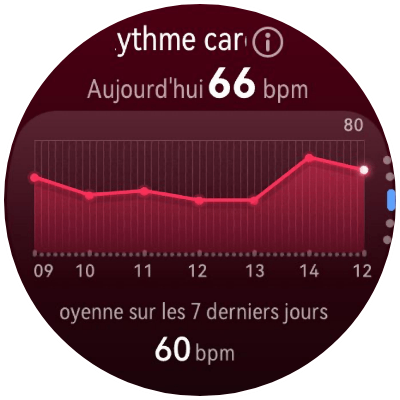
• Resting heart rate monitoring: A subtle but reliable warning in case of stress, poor
recovery or
an impending cold, which you don't want to discover in the middle of an overload
• HRV (heart rate variability): An insight into the nervous system that tells me whether my
body is
ready to exert itself or whether it needs rest to regenerate
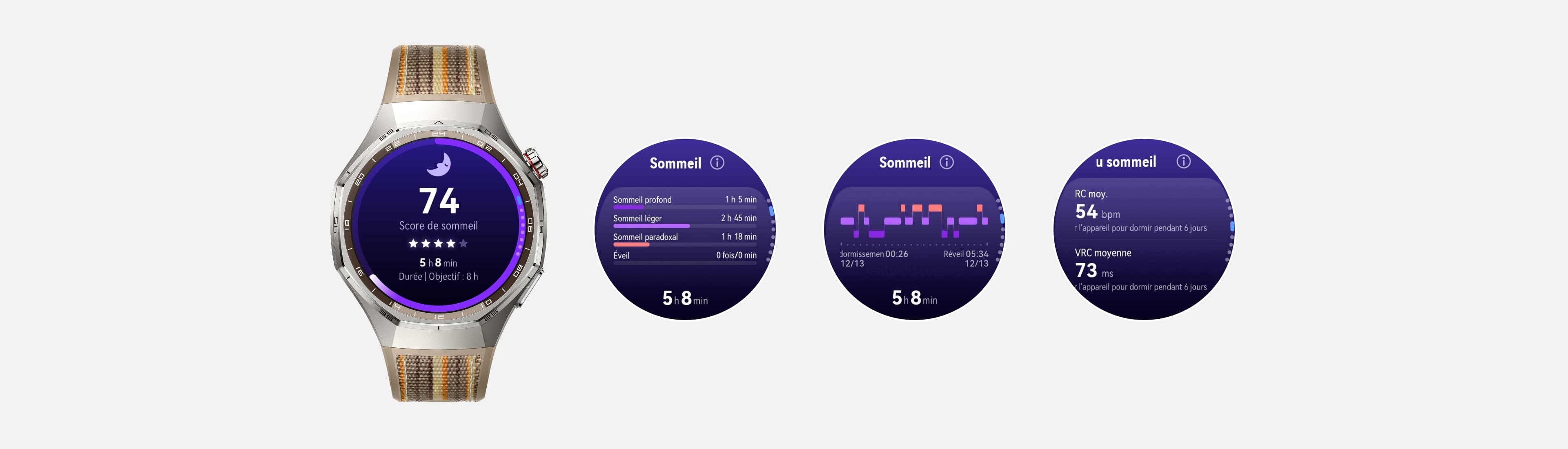
• Analysis of sleep quality: The basis for performance, concentration, problem solving and
risk
management – all crucial when decisions are more important than muscle power




Accurate GPS and Heart Rate for Advanced Sports
Up to 21-Day Battery Life no more battery anxiety for outdoor sports
Pro-level Cycling Tracking with Virtual Cycling Power
Sapphire Glass Titanium Alloy
Sleep sounds so simple. Almost boring. But it is anything but trivial. When it comes to sleep, the
HUAWEI WATCH GT 6 Pro not only shows me how long I slept, but also how
restful that sleep really
was, how well I recovered overnight, and what kind of training my body is ready for the next day.
Light sleep, deep sleep, REM phases – each element paints a picture of my performance. If the data
indicates strong recovery, I know I can push myself harder in terms of strength or endurance. If the
night was interrupted or restless, it's a sign that I should switch to lighter technique training,
mobility exercises or active recovery instead. The watch translates recovery into clear instructions
– and for a climber, that clarity is important.
Because once recovery is understood, the next step is knowing how to train, and knowing how to train
smartly makes all the difference between simply getting stronger and actually becoming a better
climber.


Train Smart, Not Hard
Climbing training is much more complex than “more strength equals more success.” If that were true,
every weightlifter would crush a 9a route. Climbing demands a multi-layered combination of physical
control, technical precision and metabolic strategy.
True progress is based on several pillars that work together:
• Finger strength: the limiting factor on tiny holds that don't forgive hesitation
• Core stability: the invisible force that ensures you can maintain body tension on steep
walls
• Antagonistic training: shoulders, chest and mobility that protect tendons and prevent
injuries
• Technique and rhythm: the choreography that makes the difference between struggle and
flow
• Aerobic and anaerobic capacity: because a key sequence can last two seconds or two minutes

“Training with purpose always beats training with ego, and the HUAWEI WATCH GT 6 Pro makes that purpose tangible.”
When you’re bouldering, your heart rate spikes like a sprint. When you’re weaving your way up a
40-metre tufa in Spain, you can sit in your aerobic-anaerobic threshold for minutes, balancing
energy output like a climber version of a tightrope walker. This is where the HUAWEI WATCH GT 6 Pro
gives me a huge advantage. One of the most important features for my training is the ability to
monitor and control my heart rate zones in real time. With the HUAWEI WATCH GT 6 Pro, I can
immediately see what I am currently training: whether I am building up my aerobic endurance for long
sport climbing tours, increasing my anaerobic strength for dynamic movements on the board, or
staying in a low intensity zone to support the regeneration and health of my tendons. Instead of
guessing, the feedback on my wrist ensures that every minute of my training is aligned with my
goals.
This level of clarity has completely changed how I approach shorter workouts. A focused, controlled
interval session on the hangboard, guided by live heart-rate feedback, can be more effective and far
safer than an unfocused two-hour grind powered only by stubbornness.
Perhaps the most underrated benefit, however, is how the watch tracks progress over time.
Improvements in climbing are rarely noticeable in a loud way – they are subtle. Some days you feel
like gravity is finally on your side, other days it feels like it has doubled overnight. The HUAWEI WATCH GT 6 Pro's data provides consistency that emotions don't. It
reveals trends and patterns you
might never otherwise notice. And when you're pushing yourself to your absolute limits, clear,
honest feedback is one of the most valuable training partners you could ask for.

For Beginners: Where to Start if Climbing Is New to You
All of this can sound intense if you’re just beginning your climbing journey and that’s
completely normal. Every climber, even those projecting 9a or standing on competition podiums,
started with the basics: learning how the body reacts, building finger and core strength
gradually, and developing technique through repetition and play.
If you’re new to climbing, a simple and sustainable training plan can make a huge difference in
preventing injuries and building confidence. For example:
• 2 days per week climbing (bouldering or top rope), focusing mainly on movement and balance
rather than trying to send the hardest route in the gym.
• 1 day per week core and antagonist training, exercises like planks, hollow holds, push-ups,
light resistance bands, supporting joints and preventing shoulder or elbow issues.
• 1 light zone-2 cardio session per week (e.g. easy run, bike or long brisk walk), supporting
endurance for longer climbs and recovery between attempts.
The most important thing for beginners isn’t intensity, it’s consistency. A little progress,
repeated often, grows into strength faster than any single hard session ever will. And once
you’ve built that foundation, whether you’re a beginner or a climber pushing into harder grades,
the real test begins outside.

Out on the Rock: Where Preparation Meets Reality
All the data, the structured training, the controlled intensity, it means nothing if it doesn’t
translate to the real world. Out there, you deal with weather, cold fingers, thin air, endless
approaches, problem solving, endurance under pressure, and the ability to stay calm when exposure
stretches beneath you. That unpredictability is part of why we love this sport - but it’s also why
preparation matters even more.
The HUAWEI WATCH GT 6 Pro helps me not only to be stronger outdoors, but also
smarter. Its GPS
navigation guides me through the surroundings without draining my smartphone battery. The ability to
import GPX routes saves time, energy and discussions with hiking partners who insist that ‘this is
how it has to be’. Thanks to the watch's long battery life, I'm covered even on expedition days when
charging isn't possible. And thanks to the titanium case and sapphire glass, I don't have to worry
when the watch rubs against rocks or scrapes through narrow chimneys, it's built for the environment
in which it's meant to be used.
But perhaps most importantly, after a day on the wall, the watch automatically logs altitude,
duration, intensity and recovery. These numbers are more than just statistics, they become
tomorrow's strategy. Was it too intense for a second day on the project? Did the altitude or the
cold affect recovery? Should I push myself or rest? After hours of clinging to limestone, the HUAWEI WATCH GT 6 Pro gives me the insights I need to make decisions with
clarity and confidence. It turns experience,
effort and exhaustion into something measurable, and that means I return to the wall better
informed, better prepared and always learning from the last attempt.

“Data isn’t there to replace intuition, it’s there to refine it. To sharpen your decisions. To help you grow stronger, smarter and more aware of your limits, not just physically, but mentally too.”
Mental Preparation - The Often-Forgotten Part
But climbing isn’t only physical. The wall demands strength, yes, but it also demands composure.
When I stand beneath a route, shoes tied, hands chalked, rope tight, I have two choices: “I hope
I’m ready.” or “I know I’m ready - because I’ve prepared for this.”
The difference between those two sentences is mental training, and the HUAWEI WATCH GT 6 Pro supports
that too. From guided breathing sessions before difficult moves, to tracking heart rate as a
tool against nerves, to sleep analysis ensuring patience and focus on project days, the watch
brings measurable calm to an unpredictable sport.
In climbing, confidence doesn’t come from pretending. It comes from preparation: from knowing
you’ve done the work, tracked the recovery, respected the process, and sharpened both body and
mind. The HUAWEI WATCH GT 6 Pro doesn’t replace that work - it reinforces it,
supports it, and reminds
you of it in the moments when doubt tries to take the lead.

Preparing for Climbs with the HUAWEI WATCH GT 6 Pro
In the end, it’s not about becoming a slave to numbers. It’s about gaining a deeper understanding of
how your body responds when you push it to its edge.
For me, the HUAWEI WATCH GT 6 Pro is more than a piece of technology. It’s a training
tool that
structures my effort, an outdoor partner that guides me through unfamiliar terrain, a bio-feedback
system that reveals what the mirror cannot, and a quiet coach on my wrist that reminds me when it’s
time to push and when it’s time to recover. Because if you want to climb harder, project further,
and truly expand your limits, preparation doesn’t start on the wall. It begins weeks earlier, in
your body, in your sleep, in your mind, in the daily choices that build resilience long before the
first move.
And through that entire journey, from the first idea to the final send, the HUAWEI WATCH GT 6 Pro is right
there with me, supporting every step, every breath, every climb.
The author of this article is Sébastien Bouin. The views expressed are his own.
The information is to be used as general information only, and is not to be taken as advice with
respect to any individual situation and cannot be relied upon as such. A healthcare provider should
be consulted when attempting to diagnose a condition or when determining the best course of action
for any health-related concern.
Users should exercise in a safe and suitable manner which is commensurate to their own exercise
capabilities and limits.
The sleep monitoring, heart rate variability, and heart rate monitoring features are not a medical
device, and therefore its monitoring data and results are for reference only and should not be used
as a basis for medical diagnosis or treatment.
Read more
Explore


Copied