

More than Data: How the HUAWEI WATCH GT Runner 2 Optimises Marathon Training

Copy Link


Written By Philipp Pflieger
More than Data: How the HUAWEI WATCH GT Runner 2 Optimises Marathon Training
Published on 02/04/2026 · 12:00
Copy Link
Written By Philipp Pflieger
More than Data: How the HUAWEI WATCH GT Runner 2 Optimises Marathon Training


About the Author

01. Introduction
02. Why GPS is Particularly Critical at Elite Level
03. Preparation: More Than Just the Countdown to the Start Line
04. The Intelligent Marathon Mode: My Coach on My Wrist
05. Post-Run: Critical Data Analysis
06. Running with the HUAWEI WATCH GT Runner 2 - My Verdict
Introduction
My name is Philipp Pflieger and until April 2023 I was a professional runner. I had dreamed of the Olympic Games since childhood, and in 2016 I was able to fulfil that dream in Rio de Janeiro, having been inspired twenty years earlier by the Atlanta 1996 Games. In the end I didn’t run in a stadium as I had always envisioned, but over the magical 42.195 km – and it was precisely that switch to marathon running that has had a lasting impact on my life.
In the end, it wasn’t the 14 German championship titles, the appearances at European Championships and the Olympic Games, or my marathon personal best of 2:12:15h that had the greatest impact on me looking back – but above all the many people, cultures, and countries I got to know and came to appreciate on my running journey over all those years. To be able to perform at this high level for so long requires smart training above all else, and training analysis and documentation are crucial for exactly that. Especially during the many altitude training camps in Kenya, the Italian Alps (Sestriere), or the mountains of St. Moritz, proper training management is essential – and that requires the right tools, namely high-end sports watches.
When the HUAWEI WATCH GT Runner 2 landed on my desk for testing, my first thought was: beautiful watch. My second thought: What can it really do? I wore it for two weeks of training. And I have to say, it surprised me in several ways.


Master real-time pace with ultra-precision GPS
Intelligent Marathon Mode
Slim Design with Titanium
Accurate heart rate, HRV and ECG
Always with Me, Wherever I Train
My daily life as an active runner, father, and media personality is anything but linear. When I’m not recording a podcast or writing a piece, I’m outside – on the asphalt in Regensburg, on the track, or when time allows, travelling and in the mountains. A watch must work in all of these worlds, without me having to think about charging twice a day.
The HUAWEI WATCH GT Runner 2 wins me over immediately: it weighs just 34.5 grams on the wrist and is, and I feel it. After two hours of easy running, you simply forget you’re wearing a watch. The titanium case sits securely, doesn’t chafe, and the breathable strap doesn’t stick uncomfortably to the skin after a sweaty tempo session. The HUAWEI WATCH GT Runner 2 feels like nothing on the wrist – and that is the highest praise I can give, because I want a watch that runs with me, not one I have to carry.
The battery lasts up to 14 days under normal use, according to the manufacturer. With tracking active during training, it covers around 35 hours. That means: one charge is more than enough for a training week with one session per day. No more fiddling with cables every day, no battery stress before a run.
Before I even began using the watch to run, I could already import my workout data from Strava. Therefore, I was able to view all my previous running data to compare with new data from my runs with the HUAWEI WATCH GT Runner 2.

Why GPS is Particularly Critical at Elite Level
GPS is not created equal – many manufacturers I’ve used in the past frequently had weaknesses on square-cornered circuits or, for example, in city canyons with tall buildings.
These inaccuracies can throw the entire race plan off, because marathon running is a precision sport. Those who think this is an exaggeration have never experienced a bad GPS day. I have. Running in a tight city, the GPS jumping all over the place and suddenly showing 3:45 min/km when I’m clearly on 3:55 pace. You start to doubt yourself. Do you adjust your pace? Or trust your legs? In moments like these, the accuracy of your watch can make or break the result.
As a marathon runner, the right and above all consistent pace is the decisive factor for a successful race. The more even and energy-efficient, the higher the probability of being able to push harder towards the end of the race and run a “negative split”. I place great importance on precision regarding total distance, especially in training. In my view, even more important – particularly in race situations – is the accuracy of the current speed and a stable real-time pace display, and for that the best possible GPS is barely good enough.
How I use GPS data: After each longer tempo run, I review the recorded route in the HUAWEI Health App. I pay attention to route deviations, micro-variations in corners, and the pace curve in sections where I had the feeling the signal was wavering. Does the recorded distance match my own perception? With the HUAWEI WATCH GT Runner 2, the answer was consistently: yes.

“GPS is not created equal – many manufacturers show weaknesses on square-cornered circuits or in city canyons. Such inaccuracies can ruin the entire race plan. With the HUAWEI WATCH GT Runner 2, this is no longer an issue.“
Preparation: More Than Just the Countdown to the Start Line
A marathon doesn’t begin on race day. It begins 12 to 16 weeks earlier, at 6 in the morning on the track, especially on days when you’d rather stay in bed. A good training plan is the be-all and end-all for a successful race. Build-up, structure, and execution need to be kept in the best possible balance, and adjustments may be necessary. The HUAWEI WATCH GT Runner 2 gives me not only the right feedback on load and recovery, but also the right recommendations to bring me to the start line healthy, fit, and optimally prepared.
Training Plans That Are Truly Tailored to Me
The HUAWEI WATCH GT Runner 2 offers a personalised training plan that I configure directly in the HUAWEI Health App. Here’s how simple it is:
• Open HUAWEI Health App → Training → Running Programme → Marathon Mode
• The AI asks for the target race and date (here: London Marathon, 27 April)
• Enter your current performance level – the watch draws on your previous VO2max values and heart rate data
• Confirm the plan and the app calculates your sessions week by week through to race day
What’s special: the plan clearly differentiates between different aerobic and anaerobic sessions, takes training load into account, and adapts dynamically. If I manage less in a week due to exhaustion or travel, the plan doesn’t stubbornly continue – it adjusts.


“The HUAWEI WATCH GT Runner 2 gives me not only feedback on load and recovery, but also a personalised training plan, to arrive at the start line optimally prepared.”
Lactate Threshold
Especially for half marathons and marathons, the correct training zones based on the individual anaerobic/aerobic lactate threshold are of central importance for successful preparation. Simply put, this threshold marks the point at which the body produces lactate faster than it can break it down. If I exceed this threshold for too long, I will collapse before kilometre 35. If I stay below it, I can keep running for hours.
The HUAWEI WATCH GT Runner 2 detects the lactate threshold automatically – without a blood test, without a treadmill lab. During a 20- to 26-minute stress test, the watch analyses your heart rate curve and derives the individual threshold from it. The next software update to the HUAWEI WATCH GT Runner 2 will introduce a fully automatic test - one that automatically calculates lactate threshold without requiring a stress test.
Key sessions that are either too fast or too slow – be it intervals, tempo runs, or specific long runs – are highly counterproductive. The top priority is therefore to hit the correct training/pace zones in the right sessions, and that’s precisely what you need the right tools for in order to get the most out of yourself.
Practical Pro-Tip
Tempo run with heart rate control: I use the displayed lactate threshold heart rate as the upper limit for my long tempo runs. If my threshold is 162 beats, I run the tempo session ideally at 158–161 bpm. This way I train just below the red zone – with maximum stimulus, and controlled risk.

Sleep, HRV, and Training Load – The Invisible Work
Many runners underestimate how greatly sleep and recovery influence training quality. I track the following metrics daily:
| My Daily Monitoring Metrics (Example Week) | |
|---|---|
| HRV | Reference value: 19–75 (the higher the better) |
| Resting Heart Rate | Personal Reference value: 38–42 bpm (warning sign: > 46 bpm) |
| Sleep Quality | Deep sleep proportion, REM phases, total duration |
| Training Load | Aerobic vs. anaerobic, total weekly load |
| Recovery Score | Dynamic, based on sleep + stress + load |


The Intelligent Marathon Mode: My Coach on My Wrist
This is for me THE absolute game-changer, something I have not seen anywhere else in comparable form. It is essentially a personal pacemaker, available to professionals and amateurs alike. The performance forecast is the most sophisticated feature I have seen in a sports watch/smartwatch, and features like the Refuel Reminder can be race-savers.

“HUAWEI’s innovative Marathon Mode is, for me, an absolute game-changer that literally guides athletes by the hand and helps them run a perfect race.“
Before the Race
In the app, I set up my target race. The HUAWEI WATCH GT Runner 2 then doesn’t just count down the days – it shows me:
• The personalised training plan through to race day (see Chapter 3.1)
• A summary of my current form (based on VO2max, HRV, training load)
• A recommendation for race strategy
• Reminders for nutrition and tapering phases
During the Race
The Marathon Mode is the point at which the watch truly shines. A specially developed watch face appears on the display – co-created with the DSM-Firmenich Running Team, the training group of Eliud Kipchoge, the fastest marathon runner of all time. No random design, but the result of real race experience at the highest level, many features of which were suggested by those from the running team themselves.
What does an athlete actually need during a race – and what just distracts? That’s the exact question behind every element of the watch face. When running, I have no time for menus or complicated displays. I need the right numbers, at a glance, at the right moment. The smartwatch shows in real time:
• Current pace vs. target pace (deviation visible in seconds)
• Cumulative deviation from target time
• Heart rate and heart rate zone
• Remaining distance and projected finish time
• Nutrition prompts based on elapsed time and intensity

I activated the In-Race Pace Guidance System on one of my long training runs (32 km), with a target pace of 4:10 min/km. The result:
| Training Analysis: 32 km Run in Marathon Mode | |
|---|---|
| Km 1–10 | ø 4:12 min/km → +2 sec. over plan (conscious adjustment) |
| Km 10–20 | ø 4:09 min/km → Plan maintained, HR stable at 148 bpm |
| Km 20–30 | ø 4:11 min/km → slight fatigue, watch recommends gel intake |
| Km 30–32 | ø 4:07 min/km → final push, HR risen to 158 bpm |
| Total deviation | only +1.4 seconds per kilometre vs. target plan |
“As a marathon runner, pace decides everything – not the speed at the start, but consistency over 42 km. The HUAWEI WATCH GT Runner 2 helps me run evenly and efficiently, so that I can push harder at the end.”
Running Power
Also new in this generation is Running Power, i.e. the absolute power output in watts, independent of gradient, wind, and terrain. I use it primarily on hilly ground. When I run uphill and my pace inevitably slows, my watt reading remains constant. My watch shows me that I’m maintaining the correct physiological load, even when the displayed pace doesn’t match the target pace. How I use Running Power: I now track hill runs with the HUAWEI WATCH GT Runner 2 primarily by watts, not pace. I have calibrated my target watt range during the first test week and now know: 280–310 watts corresponds to my marathon effort. More than that is too much, less is too little.
Post-Run: Critical Data Analysis
Analysis is what turns a runner into a thinking runner. The HUAWEI WATCH GT Runner 2 delivers an automatic post-run summary after every session, and I take it seriously. What interests me most: not the average pace – I already know that from running. I first look at my cadence and balance curves and my HRV progression during the session. Did my body process the load as planned? If the curves drop at the end of the run, that means: the tank was empty and I need to adjust my training plan accordingly.


What I Analyse After Every Run
•
Heart rate curve: Does the HR progression reflect my perceived fatigue?
•
Anaerobic vs. Aerobic: Training load – did I complete the session as planned?
•
Cadence trend: If my step frequency drops towards the end, something is off with my technique.
•
Balance: the higher the deviation, the higher the injury risk
•
Ground contact time: The lower the contact time, the more efficient / faster the run.
•
Recovery time: How long does my body need until the next training session?
Measuring Recovery, Not Guessing
One challenge that tends to be discussed less often is the correct recovery time after a marathon and how to measure or determine it. Especially after successful races and the endorphins that come with them, you often quickly feel ready for the next race or the next preparation phase. This is deceptive! Because there is often a world of difference between perceived recovery and actual recovery, and in the marathon context this typically concerns muscles, tendons, and bones. Tools like the HUAWEI WATCH GT Runner 2 that help determine the actual recovery time/recovery score are therefore truly worth their weight in gold – they help avoid potential overloading, preserve the joy of the sport, and ultimately allow you to get more out of yourself.

Running with the HUAWEI WATCH GT Runner 2 – My Verdict
Two weeks is a short time to truly get to know a running watch. But they are enough to form a clear picture. I have always been an advocate for modern performance sport: structured, reflective, and data-driven. It is the combination of experience, body awareness, and precise training analysis that brings athletes to the international level today. The HUAWEI WATCH GT Runner 2 is not a fair-weather watch, nor a dressed-up fitness tracker. It is a well-thought-out tool for runners who are serious about it.
In a marathon, an overly fast opening phase often decides between success and failure. A GPS watch helps maintain the planned pace consistently – even when adrenaline and competitive pressure are high. It is important to note that a modern GPS watch/smartwatch doesn’t run a single metre by itself. It replaces neither hard sessions nor mental strength. But it does make training smarter. This is what I want to pass on to runners at all levels: technology cannot replace years of training or a feel for your own body. But it can replace guesswork with knowledge. And the fewer uncertainties you carry into a race, the more mental capacity remains for what truly matters: the next kilometre.
Those who want to compete at the highest level must know what is happening inside their own body. And that is precisely why GPS watches/smartwatches are not a gadget for athletes like me – but a strategic tool on the path to peak performance.
The information is to be used as general information only, and is not to be taken as advice with respect to any individual situation and cannot be relied upon as such. A healthcare provider should be consulted when attempting to diagnose a condition or when determining the best course of action for any health-related concern.
Users should exercise in a safe and suitable manner which is commensurate to their own exercise capabilities and limits.
The heart rate and VO2Max features are not a medical device, and therefore its monitoring data and results are for reference only and should not be used as a basis for medical diagnosis or treatment.

Philipp Pflieger
Report
Read More
Explore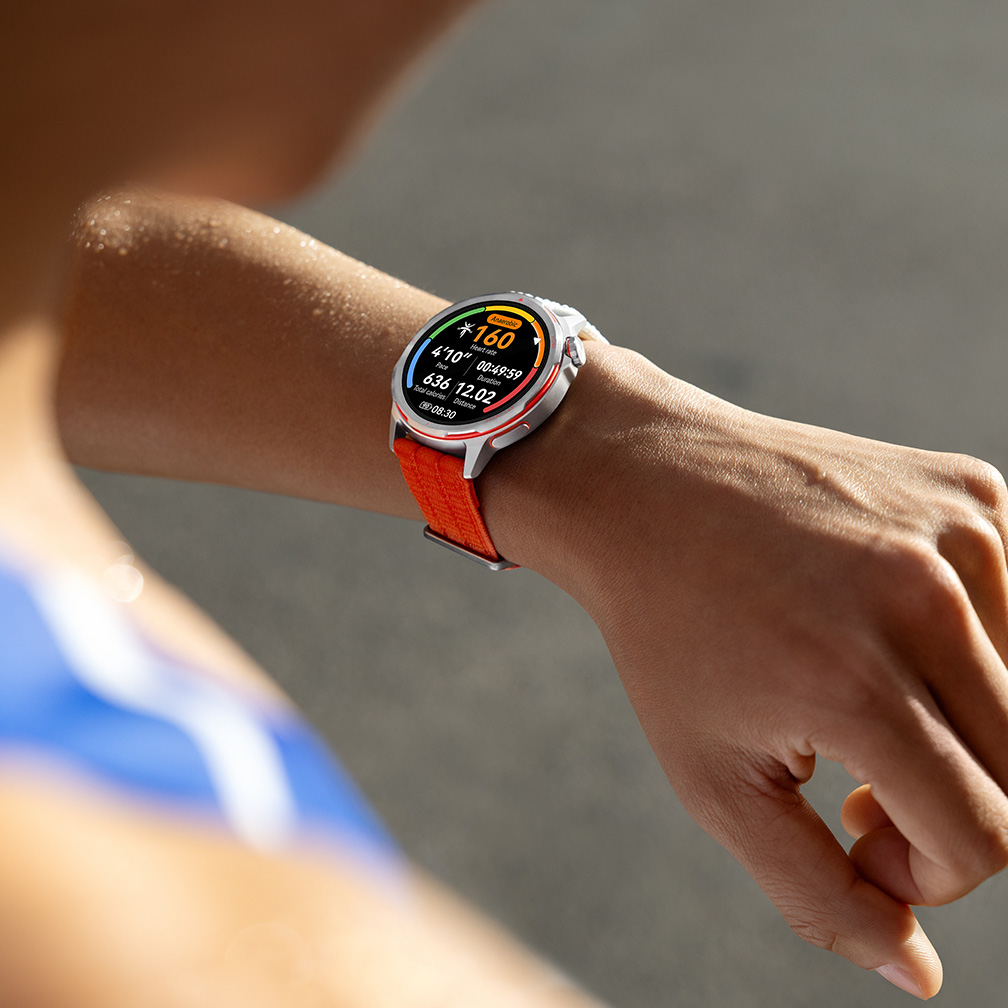



Copied