

How a Smartwatch Can Improve Your Sleep: A Complete Guide

Copy Link


Written By Prof.Ahmad N AlHadi
How a Smartwatch Can Improve Your Sleep: A Complete Guide
Reading duration: Approximately 11 minutesPublished on 10/11/2025 17:00
Copy Link


About the Author

01.Understanding Sleep Stages & Why They Matter
02.Key Sleep Metrics Tracked by Smartwatches
03.How to Use Sleep Data to Improve Your Habits
04.Limitations & Tips for Accurate Tracking
05.When to Consult a Doctor?
06.Conclusion
01
Understanding Sleep Stages & Why They Matter
A full “cycle” (light → deep → REM) often lasts 90–120 minutes; over the course of the night one
might pass through ~4–6 such cycles, though the proportion of deep vs. REM shifts (e.g. more REM
toward morning).
Why it matters: If your deep sleep is truncated (e.g. by awakenings), you may not get full
restorative benefit. If REM is suppressed, memory or emotional processing may suffer. So it’s not
just the total hours, the architecture matters.
Good to know: Sleep cycles (light, deep, REM)
Our sleep is not a homogenous block. Over a night we cycle through stages:
•Light sleep (N1 + N2):
transition from wakefulness, somewhat shallow.
•Deep sleep (N3):
slow-wave sleep, where physical restoration, growth hormone release, and clearance of metabolic
waste in the brain are more active.
•REM (rapid eye movement):
associated with dreaming, memory consolidation, emotional processing.
How HUAWEI Watches Try to Track these Stages
Huawei uses a technology they call TruSleep™, which is based on photoplethysmography (PPG)
signals (optical measurement of blood-volume changes) combined with algorithms including
cardiopulmonary coupling (CPC) [1]. In lay terms: the watch is continuously shining light into your
wrist tissues (infrared/green LEDs), measuring subtle changes in blood volume, linked with your
pulse and breathing, then feeding that into a model that guesses which sleep stage you are in. The
concept of CPC (originally proposed in ECG-based analysis) is that heart–lung interaction differs
across sleep stages; Huawei adapts that to PPG.
Huawei also uses time windows and smoothing to avoid overreacting to momentary fluctuations. They
calibrate that “light vs deep vs REM” thresholds via proprietary models and (in theory) empirical
sleep data.


Why Analyzing Sleep Stages is Crucial for Recovery & Productivity
•Deep sleep is where much of physical restoration happens (muscle repair, hormonal regulation). Poor
deep sleep is tied to fatigue, impaired immunity, poor glycemic control.
•REM is important for emotional resilience, memory, creativity. Disruption in REM may contribute to mood
symptoms, memory issues.
•If you only look at “total hours,” you miss nuances: someone may sleep 8 hours but spend too little in
deep or REM due to fragmentation or poor sleep continuity.

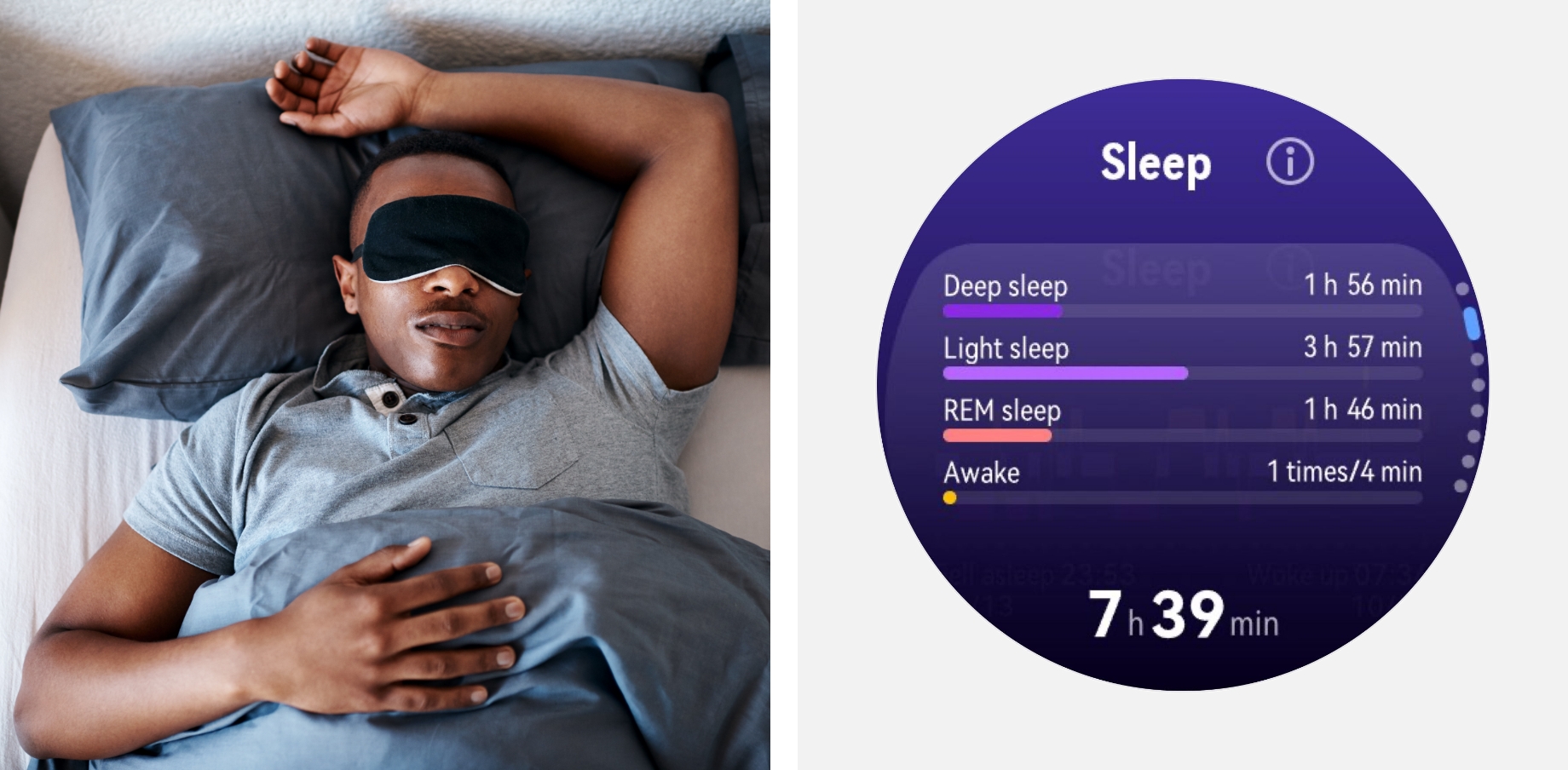
In this night’s data, total sleep was 7 h 45 min, which is within the normal range. Deep sleep made up
19 % of total sleep, slightly below the recommended 20–60 %, while light sleep dominated with 64 %,
higher than the reference value of under 55 %. REM sleep accounted for 17 %, which falls well within the
healthy range of 10–30 %.
Knowing whether your deep or REM percentage is unusually low (relative to norms or your own baseline)
can prompt targeted changes (e.g. bedtime, sleep hygiene, stress management).
02
Key Sleep Metrics Tracked by Smartwatches
As a medical professional I find it fascinating how far wearable sleep tracking has come. Devices like the HUAWEI WATCH GT 6 Pro now provide data that go well beyond simple sleep duration — offering insights into sleep stages, breathing quality, heart rate variability, and recovery trends. While these readings cannot replace clinical diagnostics, they can help users recognize irregularities in their sleep patterns and encourage healthier habits. In this section, we’ll look at the key sleep metrics that smartwatches monitor, how they are interpreted, and what value they can have for understanding overall health and well-being.
Sleep Duration: Total Hours and Consistency
Night Sleep Time indicates how many hours you actually slept, excluding any awake periods during the night. It provides a realistic measure of how restorative your rest truly was. Meanwhile, bedtime and wake-up consistency reflect how regular your sleep rhythm is; maintaining a stable schedule with minimal variability is strongly linked to improved sleep quality, hormonal balance, and overall recovery. The HUAWEI WATCH GT 6 Pro supports this by reminding you when it’s time to go to bed, helping you establish a consistent routine and gradually align your sleep cycle with your body’s natural rhythm.
Sleep Quality: Awakenings and Restlessness
The Watch calculates the total minutes you were awake after your initial sleep onset, providing a
quantitative measure of the quality of your sleep. It also tracks the number of awakenings, even if
you don’t recall them, indicating how often you briefly woke during the night. .
In this example, a wake phase is visible in the early morning hours, showing a short period of
increased activity before falling back into light sleep, a common pattern as the body transitions
toward waking up.

Heart Rate and SpO₂ During Sleep
Nighttime heart data from wearables can be informative, but oxygen saturation on consumer watches is harder to validate. Accuracy varies across devices and tends to drift at lower SpO₂ values. Treat single readings with caution and focus on trends over several nights. If you notice sustained desaturations or symptoms like loud snoring or daytime sleepiness, seek clinical testing with medical sensors [2,3].

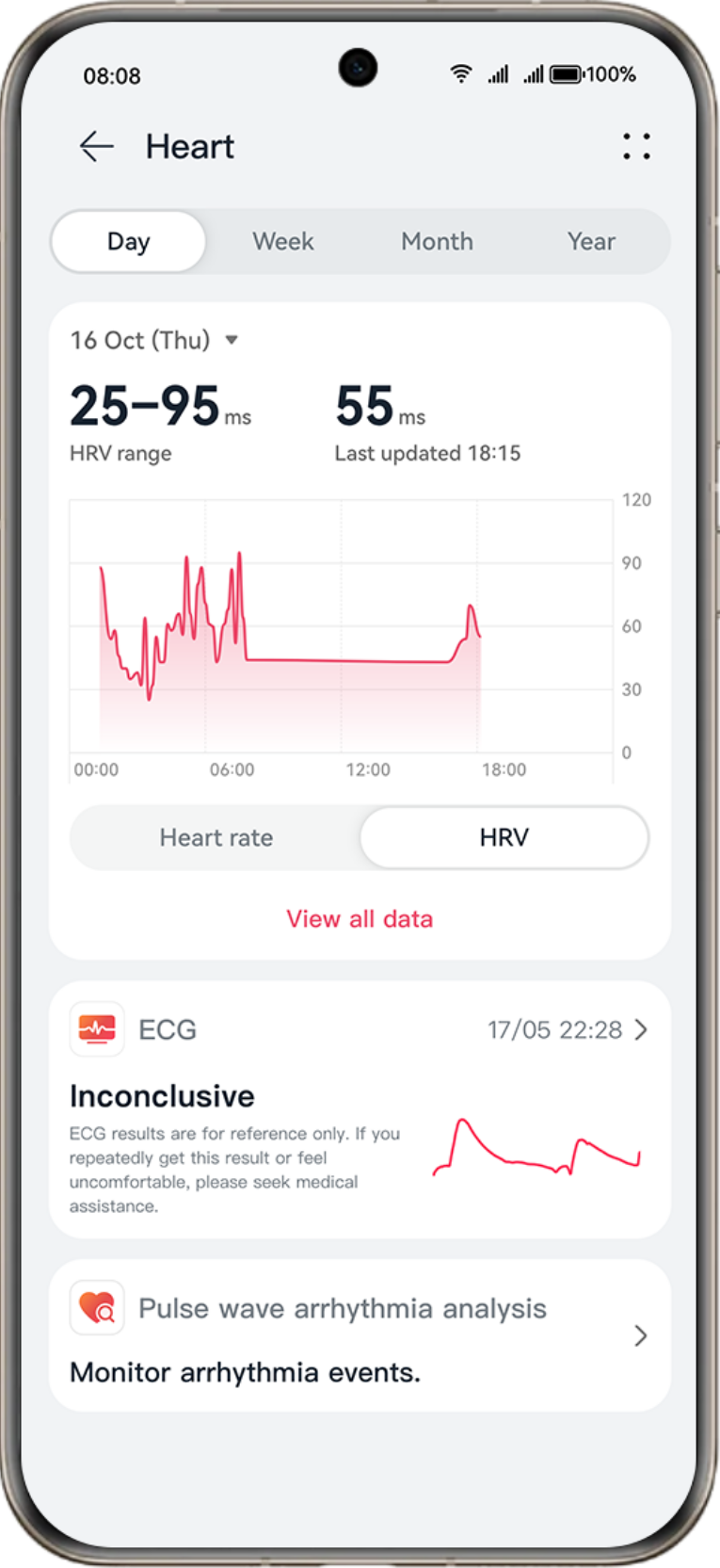
•Nighttime heart rate (HR): average and variation. Lower HR in deep
sleep is normal; higher
baseline may signal stress, poor fitness, or underlying pathology.
•Heart
Rate Variability (HRV): some watches compute HRV (variability between successive
beats)
during sleep, which is a proxy of autonomic recovery.
•SpO₂ (oxygen saturation): continuous or periodic measurement. Drops or desaturations may
indicate breathing disturbances like sleep apnea.


Breathing Disturbances and Apnea Detection
Some smartwatches attempt to detect breathing irregularities (e.g. apnea-like events) via patterns in SpO₂ dips, pulse rate fluctuations, and motion. A PPG-based smartwatch like HUAWEI WATCH GT 6 Pro, in a clinical validation study showed promise especially in screening for moderate-to-severe obstructive sleep apnea, though the authors cautioned that larger population data are needed [4]. Machine-learning models, such as SomnNET, have been developed to detect apnea events from SpO₂ time series in wearable systems. These models have demonstrated high accuracy (~97%) in experimental settings [5]. However, it’s important to note that these features are screening-level and not diagnostic unless validated by polysomnography.
03
How to Use Sleep Data to Improve Your Habits
The data collected from your Huawei Watch is only valuable if you interpret it correctly and take appropriate action. This guide provides general instructions on how to do this within a Huawei ecosystem.
Setting Sleep Goals in the HUAWEI Health App
•Input your sleep goal (e.g. 7–8 hours) or target window in the app.
•Enable reminders (e.g. “go to bed soon”) or wind-down routines if available.
•Some Huawei watches allow “sleep priority” modes (less notifications, disabling screen wake) to
minimize disruption.
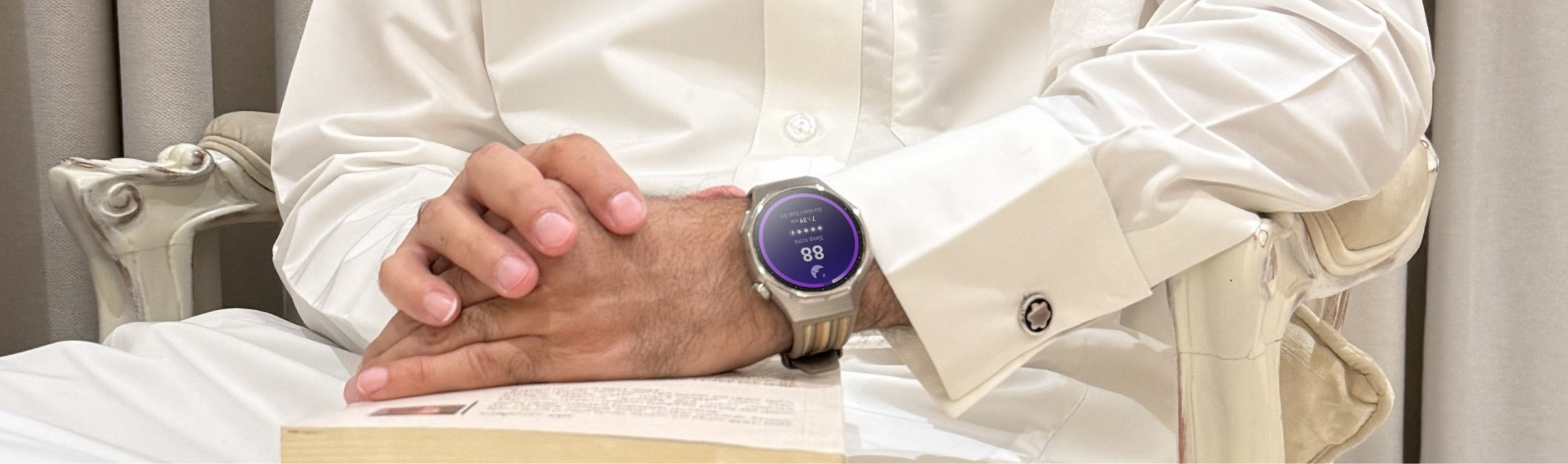

Up to 21-day battery life
Sapphire glass and aerospace-grade titanium alloy
Get new cycling power metrics on your wrist
In-depth ECG analysis
Interpreting Sleep Reports and Trends
•Don’t fixate on a single night. Look at 7-day or 30-day trends to detect patterns. The overview is
shown in your app.
•Compare your deep / REM percentages to normative ranges shown in HUAWEI Health App.
•Watch for sudden deviations (e.g. several nights in a row of high WASO or persistent SpO₂ dips).
•Use correlation thinking: e.g. “When I exercised late, my REM dropped” or “When I used screens late, my
sleep was more fragmented.”
Practical Tips based on Data and Sleep Science.
By combining your data insights with findings from sleep science, you can make small but effective
adjustments to your habits. The following tips show how to use your nightly metrics to support better
recovery, focus, and overall wellbeing.
•Adjust bedtime gradually: if your smartwatch suggests you're not getting enough deep sleep, try
moving bedtime earlier in 15-minute increments.
•Reduce evening blue light / screen use: exposure to bright screens suppresses melatonin and may
delay sleep onset or fragment sleep.
•Keep a consistent schedule: going to bed and waking at similar times stabilizes circadian
rhythm.
•Optimize bedroom environment: dark, quiet, cool (≈18–20 °C), low noise.
•Avoid heavy meals, caffeine, or stimulating activity close to bedtime.
•Use naps wisely: short (20–30 min) naps may help, but long or late naps may interfere with night
sleep.
•Stress & relaxation routines: meditation, gentle stretching, breathing exercises before bed may
reduce autonomic arousal and help smoother transitions into deep sleep.
If your watch shows repeated SpO₂ dips or suspected breathing irregularities, consider evaluating for
sleep-disordered breathing in a clinical sleep lab.

04
Limitations & Tips for Accurate Tracking
While sleep tracking technology has advanced significantly, no wearable can capture every detail perfectly. Factors like movement, skin type, or sensor placement can affect precision. Understanding these limitations, and applying a few practical habits, helps you get the most reliable and meaningful insights from your sleeping Data.
Factors Affecting Accuracy
•Fit and contact quality: if the watch is loose, slipping, or not snug, signals degrade.
•Motion artifacts: turning, shifting, arm movements can distort signals.
•Peripheral perfusion / skin temperature: cold skin or poor circulation may reduce signal
strength.
•Algorithm limitations / “black box”: the sleep-stage classification is model-based and may
misclassify, especially in atypical sleep patterns (e.g. insomnia, fragmented sleep).
•Population bias: many smartwatches are trained on healthy young adults; accuracy may drop in
elderly, diseased, or unusual phenotypes.
For example, a validation study of another smartwatch found acceptable accuracy for step counting,
but “poor to moderate” validity when measuring total sleep time compared to actigraphy, with
increasing underestimation of sleep in longer sleep durations. [6] Four generations later, the
HUAWEI WATCH GT 6
Pro’s newer sensors and TruSleep models appear to enhance stability and sleep detection in
real-world scenarios.
Another study comparing two commercial wearables against polysomnography noted that although
sensitivity (detecting sleep) was high (>95 %), specificity (detecting wake) was low (< 45 %), so
devices may overestimate sleep and underestimate wakefulness. [7]
Therefore, consider these metrics as estimates or directional indicators, rather than precise
clinical measurements.

05
When to Consult a Doctor?
Smartwatches can surface useful warning signs, but they are not medical devices. If any of the
following persist, bring your data and symptoms to a healthcare professional rather than relying on
the watch alone:
•Persistent low deep sleep compared with your usual baseline despite good sleep hygiene
•Frequent SpO₂ dips or signs of breathing disruption
•Markedly high nighttime heart rate or signs of autonomic irregularity
•Very fragmented sleep with high wake after sleep onset that correlates with daytime symptoms
In these cases a formal assessment is appropriate, for example polysomnography, home sleep testing,
and a clinical interview. The watch is a companion, not a substitute.

Conclusion
Smartwatches like Huawei’s are powerful tools to render your sleep visible. They let you see patterns
you’d never notice otherwise: nights when your REM lagged, nights when your SpO₂ dipped, or week-to-week
drift in consistency. That visibility invites reflection and adjustment.
That said: their outputs are approximations, not diagnostic certainty. Their greatest power is in
trend detection, self-awareness, and nudging incremental behavior changes. Use the data, but
don’t let it tyrannize you.
Over time, using your watch mindfully can help you build better sleep habits, detect red flags early,
and align your nightly recovery with your daytime goals. In the end, the goal isn’t perfect metrics —
it’s feeling more rested, sharper, and healthier.
1. HUAWEI Consumer Support. (n.d.). Huawei TruSleep™ scientific principles. Retrieved from https://consumer.huawei.com/en/support/content/en-us15963854
2. Lu, S., et al. (2023). Accuracy of wrist-worn pulse oximeters in measuring SpO₂ compared with standard clinical oximetry. Sensors, 23(22), 9164. https://doi.org/10.3390/s23229164
3. Huang, J., et al. (2025). Continuous blood oxygen saturation estimation using wrist and upper-arm wearable devices during polysomnography. arXiv preprint arXiv:2505.20846. https://arxiv.org/abs/2505.20846
4. de Zambotti, M., et al. (2021). Validation of a photoplethysmography-based wearable device for the screening of obstructive sleep apnea. Frontiers in Sleep, 2, 738746. https://pmc.ncbi.nlm.nih.gov/articles/PMC8453177/
5. Rahman, M. M., et al. (2021). SomnNET: Detecting sleep apnea events from SpO₂ signals using deep learning. arXiv preprint arXiv:2108.11468. https://arxiv.org/abs/2108.11468
6. Zhang, L., et al. (2024). Validity of the Huawei Watch GT2 for measuring physical activity and sleep compared with actigraphy. BMC Sports Science, Medicine and Rehabilitation, 16, 82.https://pmc.ncbi.nlm.nih.gov/articles/PMC11683742/
7. Coiro, D., et al. (2024). Metrology of two wearable sleep trackers against polysomnography in patients with sleep complaints. Journal of Sleep Research, 33(3), e13932.https://www.researchgate.net/publication/381433597

Prof.Ahmad N AlHadi
Report
Read More
Explore

Copied