

Mobile Health Technology: A Game Changer for Cardio-vascular Health Management?

Copy Link


Written by Dr. Ben Buckley and Professor Greg Lip
Mobile Health Technology: A Game Changer for Cardio-vascular Health Management?
Published on 08/12/2025 · 13:00

Copy Link


Written by Dr. Ben Buckley and Professor Greg Lip
Mobile Health Technology: A Game Changer for Cardio-vascular Health Management?

Cardiovascular health is a critical aspect of overall well-being, with blood pressure serving as a key indicator. Hypertension and other cardiovascular diseases such as atrial fibrillation are on the rise. Innovative solutions including mobile health technology can play a pivotal role in better monitoring and management of these conditions. This article explores the importance of cardiovascular health, the scale of the problem globally, and how the HUAWEI WATCH D2 can contribute to improved health outcomes.

About the Author


About the Co-author

In this article
01. The Importance of Cardiovascular Health
02. How the HUAWEI WATCH D2 Can Help
03. Practical Scenarios
The Importance of Cardiovascular Health
Cardiovascular health involves the heart and blood vessels, crucial for maintaining the
body's overall function. Blood pressure, the force of blood against artery walls, is a vital
sign of cardiovascular health. High blood pressure (hypertension, ≥140/90 mmHg) can lead to
serious health issues, including heart disease, stroke, and kidney failure. Regular blood
pressure monitoring can help in early detection and better management of hypertension and
its risks.
• The Scale of the Problem
How widespread is high blood pressure? A glance at the statistics reveals that it’s a
pervasive and serious health issue across the globe:
· United Kingdom: Nearly 1 in 3 adults suffers from high blood pressure, highlighting
a
major public health concern.
· Europe: Over 30% of adults are affected by hypertension, with cardiovascular
diseases
(CVDs) being the leading cause of nearly half of all deaths in Europe.
· Global: Approximately 1.13 billion people have hypertension, making it the leading
cause
of death and responsible for 31% of premature deaths.
· Two-thirds of individuals with hypertension live in low- and middle-income
countries.
These statistics underscore the critical importance of innovative health technologies, such
as the HUAWEI WATCH D2, in the early identification of early
blood pressure abnormalities to
improve health outcomes and reduce the global burden of these diseases.

How the HUAWEI WATCH D2 Can Help
Blood Pressure Monitoring
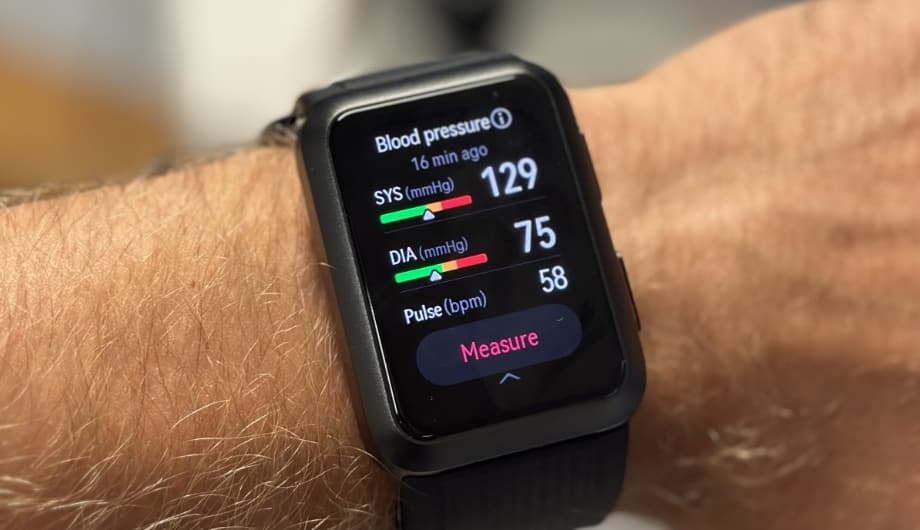
The HUAWEI WATCH D2 is equipped with advanced blood
pressure monitoring capabilities. This
watch uses a mini pump and pressure sensors to provide accurate, clinical-grade blood
pressure readings. This monitoring allows users to track their blood pressure trends over
time, helping to detect early signs of hypertension or fluctuations that might need medical
attention, like Non-Dippers. Identifying these patterns helps medical professionals who,
with access to such data, may take steps to tailor treatment strategies for better
cardiovascular health management.
Good to know
Dippers experience a significant drop in blood pressure at night, typically about 10% or more compared to daytime levels, which is a healthy response and linked to a lower risk of cardiovascular events.
The ECG (Electrocardiogram) feature of the HUAWEI WATCH
D2 enables users to monitor
their
heart's electrical activity. This is crucial for detecting irregularities such as atrial
fibrillation (AF), a common heart rhythm disorder that increases the risk of stroke and
heart failure.
• On-Demand ECG:
Capture ECG recordings whenever needed or wanted
• Data Storage for Healthcare Review:
These recordings can be stored and shared with healthcare professionals for further analysis
and review.


Ambulatory Blood Pressure Monitoring
All-Round Health Management
Light and Slim Design
Smart Living Experience
Heart Rate Monitoring provides users with real-time data on their heart's
performance. This
feature helps in understanding how physical activities, stress, and other factors affect
heart rate, contributing to a more comprehensive view of cardiovascular health.
By tracking Sleep Patterns the HUAWEI WATCH D2 provides insights into sleep stages and
quality. Quality sleep is essential for heart health. Poor sleep can negatively impact blood
pressure and overall cardiovascular health, so this feature helps users identify and address
sleep-related issues.
The watch also tracks Stress Levels through heart rate variability, offering users
insights
into their stress patterns. High stress can contribute to elevated blood pressure and other
cardiovascular problems, making stress management an important aspect of overall health.
Blood Oxygen Levels (SpO2) can be indicative of respiratory issues or other
underlying
health conditions, which can affect cardiovascular health. It can also be of interest, if
travelling to altitude, to monitor how well your body is coping and reduce altitude
sickness.
The HUAWEI WATCH D2’s Lifestyle Recommendations and Fitness Tracking can motivate
users to
adopt healthier habits. Regular physical activity is known to lower blood pressure and
improve cardiovascular health.

Figure 1: I tested the GPS function of the watch in the mountains of Snowdonia and was impressed.
The integration of advanced health monitoring
features in everyday devices such
as the
HUAWEI WATCH D2 is revolutionising how we approach personal health and disease prevention.
Practical Scenarios
a. Early Detection and Prevention
Regular monitoring with the HUAWEI WATCH D2
can identify signs of hypertension early,
allowing for timely interventions that prevent serious health complications, if data is
passed on to a medical professional. Detecting abnormalities in ECG readings or blood
pressure trends enables proactive management of cardiovascular health. We found the watch to
be highly accurate and easier than traditional blood pressure measurement methods to monitor
patient blood pressure on the go (in real life settings) and allowing us to monitor blood
pressure recovery following exercise.
Clinical relevance of blood pressure recovery
Normal blood pressure recovery: After exercise, blood pressure gradually returns to baseline
levels.
The speed and pattern of this recovery are influenced by factors such as fitness level, age, and the
presence of cardiovascular conditions.
Delayed blood pressure recovery: Slower recovery of blood pressure post-exercise has been
associated
with an increased risk of CVD. This delayed response may indicate underlying autonomic dysfunction
or arterial stiffness, both of which are risk factors for cardiovascular events.
Exaggerated post-exercise hypertension (PEH): While post-exercise hypertension is generally a
positive response, an exaggerated decrease in blood pressure could be a concern, especially in
individuals with cardiovascular disorders, as it may lead to dizziness or fainting.
CVD risk and blood pressure recovery
Predictive Value: The rate of blood pressure recovery post-exercise is a strong predictor of
future
cardiovascular events. Studies suggest that individuals with a slower recovery are at higher risk
for hypertension, myocardial infarction, and stroke.
Exercise as a Therapeutic Modality: Regular exercise training can enhance PEH and improve
blood
pressure recovery, thus reducing overall CVD risk. It is particularly beneficial in hypertensive
individuals, where the post-exercise reduction in blood pressure can be more pronounced and
sustained.
Autonomic Function: Impaired autonomic function, which is often reflected in abnormal blood
pressure
recovery, is linked to higher mortality in CVD patients. Monitoring blood pressure recovery can,
therefore, be a useful tool for medical professionals in assessing cardiovascular health and
tailoring exercise prescriptions.

b. Enhanced Patient-Doctor I nteraction
Data collected by the HUAWEI WATCH D2 can be shared with healthcare providers, facilitating
better informed consultations and personalised treatment plans. This data-driven approach
supports more effective management of cardiovascular conditions. The watch allows for
accurate blood pressure readings to be taken in real-life scenarios – this can improve
understanding of blood pressure trends outside of the clinical environment. One thing we
would like to see in future models is a 24-hour blood pressure measurement option. This
would allow for more in-depth and personalised hypertension management and prevention. It
would also allow for investigation of blood pressure ‘dippers’ and ‘non-dippers’.
Good to know
Dippers experience a significant drop in blood pressure at night, typically about 10% or more compared to daytime levels, which is a healthy response and linked to a lower risk of cardiovascular events. Non-dippers do not have this nocturnal drop, which can indicate a higher risk for heart disease.
c. Daily Health Management
The HUAWEI WATCH D2 provides actionable insights, motivating users to adopt healthier
lifestyles, such as increased physical activity and better dietary choices. By integrating
health monitoring into daily life, users can make informed decisions about their health and
well-being. Linked to blood pressure recovery following activity, this can be more
preventive (avoiding hypertension), or helping to better manage hypertension (by improving
lifestyle in addition to existing medication for the best results).


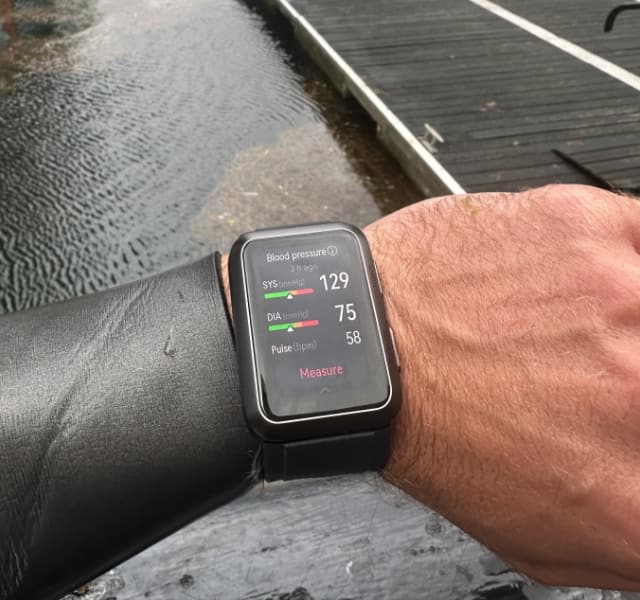
Figures. From left to write, testing the watch in our research labs compared to
traditional automatic blood pressure monitors,
using it to test blood pressure recovery, and testing BP recovery after an open water swim.
Conclusion
The HUAWEI WATCH D2 represents a significant advancement in personal health technology, that allows for easy blood pressure measurement at anytime, whether at the work place or during and following exercise. This allows for a more ‘real-world’ understanding of blood pressure trends - which can support medical professionals in identifying early risk of cardiovascular diseases and help activate personalised treatment plans. As cardiovascular diseases continue to pose a global challenge, mobile health technology is an emerging and powerful tool in the fight against this growing epidemic. Smart wearables can help individuals make proactive changes and manage their health more effectively, while allowing for more integrated cardiovascular health management opportunities. The HUAWEI WATCH D2 offers the convenience and comprehensive health insights needed to balance the demands of a busy lifestyle with the pursuit of better health.
NCD Risk Factor Collaboration. (2017). Worldwide trends in blood pressure from 1975 to 2015: a pooled analysis of 1479 population-based measurement studies with 19·1 million participants. The Lancet, 389(10064), 37-55. https://doi.org/10.1016/S0140-6736(16)31919-5
European Society of Cardiology. (2019). 2019 ESC Guidelines for the management of arterial hypertension. European Heart Journal, 40(5), 321-362. https://doi.org/10.1093/eurheartj/ehy339
World Health Organization. (2020). Hypertension. https://www.who.int/news-room/fact-sheets/detail/hypertension
Global Burden of Disease Study. (2017). Global, regional, and national age-sex-specific mortality for 282 causes of death in 195 countries and territories, 1980-2017: a systematic analysis for the Global Burden of Disease Study 2017. The Lancet, 392(10159), 1736-1788. https://doi.org/10.1016/S0140-6736(18)32203-7
Shiroma EJ, Lee IM. Physical Activity and Cardiovascular Health. Circulation 2010;122:743-752. doi: 10.1161/CIRCULATIONAHA.109.914721
Bannell DJ, France-Ratcliffe M, Buckley BJR, Crozier A, Davies AP, Hesketh KL, Jones H, Cocks M, and Sprung VS. Adherence to unsupervised exercise in sedentary individuals: A randomised feasibility trial of two mobile health interventions. Digital Health. 2023. 20552076231183552.
Harrison SL, Buckley BJR, Zheng Y, Hill A, Hlaing T, Davies R, Guo Y, Lane DA, Lip GYH; Liverpool-Huawei Stroke Study Investigators. Evaluation of Huawei smart wearables for detection of atrial fibrillation in patients following ischemic stroke: The Liverpool-Huawei stroke study. Am Heart J. 2022. 257:103-110. doi: 10.1016/j.ahj.2022.12.004.
Leo DG, Buckley BJR, Chowdhury M, Harrison SL, Isanejad M, Lip GYH, Wright DJ, Lane DA; on behalf of the TAILOR investigators. Interactive remote patient monitoring devices for managing chronic health conditions: systematic review and meta-analysis. Journal of Medical Internet Research. 2022. doi:10.2196/35508.
Buckley BJR and Lip GYH. Comprehensive ‘Cardiovascular Health’ Rehabilitation: An integrated approach to improve prevention and rehabilitation of cardiovascular diseases. Thrombosis and Haemostasis. 2022. doi:10.1055/s-0042-1757403.
Read more
Explore
Copied